Buy or rent our products online!
Many people today feel constantly “on edge,” mentally exhausted, or unable to fully relax—even when life appears calm on the surface. This experience is often linked to nervous system overstimulation, a state in which the brain and nervous system remain in a heightened mode of activity for too long.
Modern life places continuous demands on the brain. Digital exposure, chronic stress, poor sleep, emotional pressure, and lack of recovery time can overwhelm the nervous system’s natural ability to regulate itself.
At Bhakti Brain Health Clinic, we view nervous system regulation as a foundation of mental, emotional, and physical well-being. Rather than focusing only on symptoms, we help individuals understand how their brain activity and nervous system patterns influence daily life—and how balance can be gently restored through personalized, brain-based care.
Understanding the Nervous System and the Brain
To understand overstimulation, it helps to first understand how the brain and nervous system work together.
The Central and Peripheral Nervous System
The central nervous system includes the brain and spinal cord. It processes information and coordinates responses throughout the body.
The peripheral nervous system connects the brain and spinal cord to the rest of the body through nerves, allowing communication with muscles, organs, and sensory systems.
Together, these systems regulate:
- Stress responses
- Sleep and alertness
- Emotions and behavior
- Movement and coordination
- Memory and focus
Neurons and Electrical Communication
The brain is made up of billions of neurons, also called nerve cells. These specialized cells communicate using electrical signals and chemical messengers.
Key parts of neuronal communication include:
- Dendrites, which receive signals
- Axons, which carry signals forward
- Synapses, where neurons connect
- Ongoing patterns of brain activity
When these signals remain balanced and coordinated, the nervous system can shift smoothly between activity and rest.
Brain Activity and Regulation
Different brain areas play different roles in regulation:
- The cerebral cortex supports thinking, attention, and awareness
- The limbic system processes emotions and stress responses
- The prefrontal cortex helps with calming, decision-making, and self-control
Healthy regulation depends on balanced communication and synchronized activity across these areas.
What Does an Overstimulated Brain Mean?
An overstimulated brain is not “broken.” It is a brain that has been asked to stay alert, responsive, or stressed for too long without adequate recovery.
From a brain-based perspective, overstimulation involves:
- Continuous or excessive neural signaling
- Difficulty shifting into calm or restorative states
- Reduced flexibility in brain activity patterns
Hyperarousal and Regulation Challenges
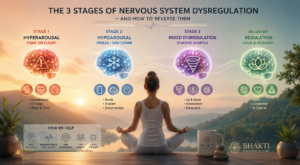
When the limbic system remains highly active, the brain may interpret neutral situations as stressful. At the same time, the prefrontal cortex may struggle to apply calming and regulation signals.
This imbalance can affect:
- Emotional responses
- Attention and focus
- Sleep quality
- Stress tolerance
Over time, the nervous system may remain “on guard,” even when rest is needed.
Common Signs Your Nervous System Needs Regulation
Nervous system overstimulation can show up in many ways. These signs are often subtle at first and may fluctuate over time.
Emotional and Cognitive Signs
- Constant mental chatter or racing thoughts
- Difficulty focusing or staying present
- Memory lapses or mental fatigue
- Emotional reactivity or irritability
- Feeling overwhelmed by small tasks
Physical and Sensory Signs
- Trouble falling or staying asleep
- Feeling tired despite adequate rest
- Heightened sensitivity to noise, light, or touch
- Muscle tension or restlessness
- Difficulty fully relaxing
Stress and Energy Patterns
- Feeling “wired but tired”
- Heightened stress response to daily situations
- Difficulty slowing down, even during downtime
These experiences often reflect how the brain and nervous system are processing ongoing demands.
How Overstimulation Affects the Brain–Body Connection
The brain and body are deeply connected through the nervous system. When brain signals remain elevated, the effects are often felt physically.
Brain Signals and the Body
Signals from the brain travel through the spinal cord, cranial nerves, and motor neurons, influencing:
- Movement and muscle tone
- Digestion and appetite
- Body temperature regulation
- Energy levels and fatigue
At the same time, sensory input from the body sends information back to the brain, shaping emotional and behavioral responses.
Why the Body Feels the Stress
When regulation is reduced:
- Muscles may remain tense
- Digestion may feel disrupted
- Energy may fluctuate unpredictably
- The body may struggle to enter rest-and-recovery states
This is why nervous system balance is essential for both mental clarity and physical comfort.
Why Nervous System Regulation Matters
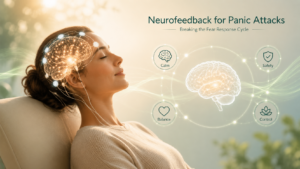
Without regulation, the nervous system can become less adaptable over time, something Neurofeedback is designed to support, though this does not mean permanent damage, just that daily life may feel more difficult than it needs to be.
Without regulation, the nervous system can become less adaptable over time. This does not mean permanent damage, but it can make daily life feel more difficult than it needs to be.
Long-Term Effects of Dysregulation
Persistent overstimulation may affect:
- Emotional resilience
- Sleep consistency
- Focus and learning
- Stress recovery
- Behavioral flexibility
Regulation helps the brain shift smoothly between activity and rest, supporting overall well-being.
Benefits of Restoring Balance
When brain activity becomes more balanced and synchronized, individuals often experience:
- Improved emotional stability
- Better sleep quality
- Increased focus and clarity
- Greater stress tolerance
- A calmer sense of control
How Bhakti Brain Health Clinic Supports Nervous System Regulation
At Bhakti Brain Health Clinic, nervous system regulation is approached with care, precision, and compassion.
A Personalized, Brain-Based Approach
We recognize that every nervous system responds differently to stress. Our care is individualized, not standardized.
Support may include:
- Understanding personal brain activity patterns
- Identifying areas of overactivation or underactivity
- Supporting the brain’s natural regulation processes
Role of qEEG Brain Mapping
qEEG brain mapping allows us to observe patterns of brain activity across different areas of the brain. This helps us understand how the nervous system is functioning as a whole system.
The goal is insight—not diagnosis—so care can be tailored appropriately.
Gentle, Non-Invasive Strategies
Regulation-focused care is:
- Non-invasive
- Drug-free
- Supportive and gradual
- Adjusted over time based on response
Progress is monitored, and care plans evolve with the individual.
When to Seek Professional Support
Self-care practices are valuable, but sometimes they are not enough on their own.
You may consider professional support if:
- Stress or overstimulation feels persistent
- Sleep issues continue despite lifestyle changes
- Emotional or cognitive strain affects daily life
- Recovery feels limited or inconsistent
Early, individualized support can help the nervous system regain flexibility before patterns become more ingrained.
Conclusion: Restoring Balance Starts With Understanding Your Brain
An overstimulated nervous system is a sign that your brain has been working hard to keep up with life’s demands. It is not a personal failure, and it is not something you must simply push through.
At Bhakti Brain Health Clinic, we believe that regulation begins with understanding, understanding your brain, your nervous system, and how they respond to stress. Bioelectric Medicine allows us to offer personalized, brain-based support so balance can be restored gently and sustainably.
Calm, clarity, and resilience are not out of reach. They begin with listening to your nervous system and supporting it with care.
Frequently Asked Questions (FAQs)
What does it mean to have an overstimulated nervous system?
It means the brain and nervous system remain in a heightened state of activity and have difficulty shifting into rest and recovery.
Can nervous system overstimulation affect sleep and focus?
Yes. Overstimulation often disrupts sleep patterns and makes sustained focus more challenging.
How does brain regulation help calm the nervous system?
Regulation supports balanced and synchronized brain activity, helping the nervous system shift out of constant alertness.
Is nervous system regulation safe and non-invasive?
Yes. Regulation-focused approaches used at Bhakti Brain Health Clinic are non-invasive and supportive.
How does Bhakti Brain Health Clinic support regulation?
We use personalized, brain-based approaches, including qEEG brain mapping, to guide gentle and individualized care.
Can nervous system regulation improve daily functioning?
Many people find that improved regulation supports better sleep, emotional balance, focus, and overall well-being.