Buy or rent our products online!

5 Brain-Based Therapies That May Support Perimenopause Brain Fog
Brain fog during perimenopause can make it harder to concentrate, recall information, and manage daily tasks. Brain-based approaches such as neurofeedback aim to address brain activity related to these difficulties. Here are five therapies people may explore, how each works, and what to discuss with a qualified provider:
1. Explore Neurofeedback Training
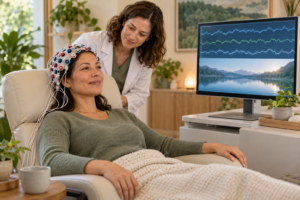
Neurofeedback uses scalp sensors to record electrical brain activity. Software translates the recordings into visual or sound feedback, and a provider selects the patterns the training will target. When activity meets the selected criteria, the system supplies a cue, such as a changing image or tone.
The recording sensors do not deliver electrical stimulation. Some neurofeedback systems collect signals from several scalp locations, and providers may use a separate brain activity assessment to plan sessions. Although recordings show electrical patterns, they do not prove that hormones caused a person’s brain fog.
Ask specific questions before starting neurofeedback. Providers use different equipment and training methods, and the proposed schedule should match a clearly explained plan. If you want to understand the process, start with these questions:
- Training goals: Ask which patterns the provider plans to target and how those targets relate to your concerns.
- Session structure: Request details about setup, training time, breaks, and the expected number of appointments.
- Progress reviews: Ask how the provider will compare daily functioning and your reported experiences over time.
2. Examine Electrical Neurostimulation
Electrical neurostimulation applies controlled currents through electrodes placed on the scalp. Direct current stimulation uses a steady current, while alternating current stimulation uses a current that changes direction. These methods differ from neurofeedback, and providers choose settings based on the approach they recommend.
The setup requires professional screening. A provider reviews relevant medical information, explains possible sensations, and you should report any discomfort during the session. If a clinic proposes stimulation alongside neurofeedback, ask what each method contributes and how the provider will assess the combined plan.
3. Review Red Light Therapy
Brain-directed red light therapy uses devices that deliver red or near-infrared light around the head. Providers call this approach photobiomodulation, and some systems use a headset or helmet. When you ask about a session, request a plain-language explanation of the device, light settings, and intended purpose.
Device details matter; equipment varies in light wavelength, placement, and exposure time. Research has examined brain-directed light for cognitive applications. Ask how the provider evaluates suitability. Red light therapy delivers light, while neurofeedback provides feedback based on recorded activity.
4. Understand Audiovisual Entrainment
Audiovisual entrainment uses rhythmic light and sound. A person typically wears light-emitting goggles and headphones, and the device presents a programmed sequence. Although the term sounds technical, it describes an approach that uses repeated sensory signals rather than the activity-based feedback used in neurofeedback.
Before trying a program, discuss whether its flashing lights and sound suit your health history and sensory preferences. Share any history of seizures, light sensitivity, or reactions to flashing screens. The provider should explain screening and stopping instructions, and you should know how to report an uncomfortable response.
5. Practice Heart Rate Biofeedback
Heart rate biofeedback tracks the timing between heartbeats. A sensor displays this information, and a provider guides breathing practice while you watch the readings. With this method, you practice responding to body feedback rather than the brain activity signals used in neurofeedback.
A training plan should explain the breathing routine. The provider may assess several breathing rates, and you can ask how they choose a comfortable pace. If you want clear instructions for practice, discuss these details:
- Breathing pace: Ask how to follow the rhythm without forcing unusually deep breaths.
- Practice schedule: Clarify when to practice and how long each exercise should last.
- Tracking: Record your practice and relevant daily experiences so reviews include more than device scores.
Keep the feedback in context. When you review progress, describe practical experiences such as completing tasks or following conversations.
Book Your Neurofeedback Consultation

These five approaches use different signals and tools. Neurofeedback and heart rate biofeedback involve feedback-based practice, while electrical stimulation, red light therapy, and audiovisual entrainment deliver external signals. If perimenopause brain fog affects your daily activities, a consultation can help you discuss your symptoms, review the proposed options, and set clear goals. Contact a modern brain health clinic near you to book your neurofeedback consultation today.