Buy or rent our products online!

The Role of HRV Biofeedback in Anxiety and Meditation
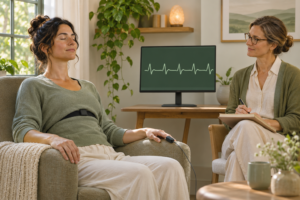
Anxiety can make it difficult to settle into meditation, especially when physical signs of stress draw attention away from the practice. Heart rate variability (HRV) biofeedback provides information about changes in heart rhythm during breathing exercises, giving people a way to observe their body’s responses. Here is a closer look at how this feedback can support meditation:
Can Anxiety Affect Meditation?
Anxiety can make sitting quietly difficult. You can experience repeated worries or an urge to move, and following a meditation recording often takes effort. When your attention shifts to unfinished tasks or potential problems, returning to the exercise becomes part of the practice, not proof you failed.
Meditation does not require an empty mind. Thoughts can continue, and you can notice them without following every story. If you approach meditation as a test of whether anxiety has disappeared, you may spend the session checking your feelings instead of following the instruction. Your care provider needs specific and practical observations. You can describe losing track of a breathing cue, and the provider will clarify or adjust the exercise. If focusing inward makes anxiety more noticeable, discuss using an external anchor, keeping your eyes open, or shortening the practice.
What Does HRV Biofeedback Track?
HRV, or heart rate variability, describes the variation in time between consecutive heartbeats. Heart rate counts beats per minute, and HRV examines the spacing between them. Although these measurements relate to the same heartbeat recording, they provide different information.
Tracking Heartbeat Timing and Breathing
A provider may use chest sensors or an optical pulse sensor. The software calculates timing changes, and some systems also track breathing with a separate sensor. When you review the display, ask which signals the equipment records directly and which numbers the software calculates. The graph shows patterns across the recording. Your provider checks signal quality, and movement or poor sensor contact can affect the result. If a number changes during practice, ask what it means.
Monitoring Other Body Signals
Some systems collect more information. Sensors track skin temperature or skin moisture, and the provider reviews these readings alongside heart and breathing data. If your session includes these measurements, ask how each one contributes to the practice plan. When anxiety remains present despite a favorable display, tell your provider rather than assuming the equipment overrides your observations.
What Is Breathing’s Role?
Breathing provides a shared activity. Meditation often uses the breath as an attention anchor, and HRV biofeedback tracks recorded patterns during breathing practice. Although the exercises can look similar, meditation emphasizes noticing experience while biofeedback adds measured information about selected body signals.
Heart rate commonly increases during inhalation and falls during exhalation. Paced breathing gives the exercise a rhythm, and a provider can compare recordings at different comfortable rates. When selecting a pace, the provider should explain the process.
Slower does not automatically mean better. Follow a comfortable breathing pattern, and avoid forcing large breaths to match a display. If you notice dizziness, breathlessness, or increased anxiety, pause the exercise and tell your provider instead of trying harder to reach a target.
What Happens in Combined Practice?

A combined practice session begins with a discussion. You describe your experience with anxiety and meditation, and your provider explains the equipment and exercise. Before practice begins, make sure you understand the instructions, the planned duration, and how to request a pause. Here are some key tips:
- Establish a starting point: The provider records your usual breathing, and you describe your experience while sitting comfortably. While recording continues, follow the instructions without trying to improve the numbers.
- Practice with guidance: Follow the agreed breathing cue. The provider monitors the signals, and you report how comfortable you feel.
- Add meditation: Choose one attention anchor. When thoughts appear, return to the anchor; when anxiety interrupts, describe what happened during the review.
How Do You Monitor Progress?
Progress needs a practical definition. You can track practice time and comfort, and your provider will review how consistently you followed the exercise. When evaluating anxiety, describe daily experiences separately from changes recorded during a guided breathing session. Keep your notes brief, and add one observation about distractions or comfort. If you compare recordings over time, ask whether posture, breathing pace, equipment, and recording length remained similar enough to support that comparison. HRV scores do not diagnose anxiety. If anxiety continues to affect your daily activities, discuss that experience with a qualified professional.
Get Help for Anxiety Today
Meditation helps you practice attention. HRV biofeedback adds recorded data and breathing guidance, and combining them creates a structured practice. To explore anxiety and meditation with personalized guidance, contact Bhakti Brain Health Clinic to book your consultation and discuss your goals, questions, and available options.