Buy or rent our products online!

How Neurofeedback and Meditation Work Together

Neurofeedback and meditation both involve paying attention to mental activity, but they use different methods. It provides real-time information about brain activity during training, while meditation uses practices such as focused attention and awareness. Understanding how the two approaches work may help you see where they can complement each other.
Comparing Meditation and Neurofeedback
Meditation starts with an instruction. You may follow your breathing or repeat a phrase, and you return to that activity whenever your attention wanders. Although different traditions use different methods, the practice involves noticing your experience.
Neurofeedback starts with recorded brain activity. During a standard EEG session, sensors rest on your scalp, and software tracks selected features of the recording. As these features meet the training settings, the system changes a sound, image, or game to provide feedback.
The sensors record electrical activity. They do not read thoughts, and standard EEG neurofeedback does not send electricity into your brain. While meditation relies on your own observations, this practice adds an external signal that a provider must interpret in the context of the session.
Supporting Meditation With Neurofeedback
Feedback adds another point of reference, which is what neurofeedback provides. You observe your experience, and the equipment provides information about a selected training target. When a provider connects that target to a clear practice goal, you can discuss how your experience relates to the recording.
- Clear instructions: Choose one practice task, have your provider explain it, and try it. If the instruction is unclear, ask for a demonstration.
- Live feedback: Watch an image or listen to sounds. The signal changes, you continue the task, and when you review the changes, ask what they represent.
- Personal observations: Describe your experience; your provider reviews the recording, and you compare notes. If your experience differs from the feedback, discuss it.
Neurofeedback provides a framework for guided practice. The provider explains the task, and you report what you noticed while completing it.
Matching Styles With Goals
Meditation includes several practices. Each style uses different instructions, and the session goal should match those instructions. Before adding neurofeedback, discuss which practice you want to explore and how the provider would select a relevant neurofeedback target.
Focused Attention and Mindfulness
Focused attention uses one anchor, such as your breath. Mindfulness allows broader observation; you notice thoughts, sounds, or physical sensations. When either practice includes neurofeedback, the provider should explain how the selected measurement relates to the exercise.
Open Heart and Quiet Mind
Open heart practice uses phrases of goodwill toward yourself or others. Quiet mind practice involves observing inner commentary, and thoughts may continue throughout the exercise. These styles use different instructions; they do not require you to produce a specific brainwave pattern on demand or stop every thought that arises.
Combining Meditation and Neurofeedback
A combined practice begins with a conversation. You describe your meditation experience and goals, and the provider explains the equipment and session plan. If you struggle to follow a particular instruction, that detail gives the provider something specific to address.
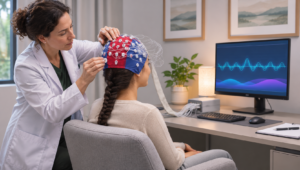
Your appointment may include several steps. The provider reviews the recording, and you learn how the feedback works before you begin the exercise. Although providers use different systems, you should understand what each part of your neurofeedback session involves.
- Setup: The provider places sensors on your scalp. You sit comfortably, and the provider checks the contact.
- Practice: Follow the agreed exercise. The feedback changes, and the provider monitors the recording.
- Review: Describe what you noticed. The provider reviews the session, and you discuss practical observations.
Home practice can also remain simple. You may repeat the same meditation instruction without equipment, and record questions for your next appointment.
Reviewing Progress and Benefits
Progress needs a clear definition. You and your provider can track attendance, practice time, and your ability to describe distractions; these observations can guide later discussions. When you review neurofeedback recordings, ask whether changes reflect neurofeedback settings, recording quality, or a consistent pattern across sessions.
The practical value may lie in structure and clearer task feedback. If you cannot explain what the feedback represents, ask questions before using scores to judge your practice. Keep expectations specific, and ask the provider why they recommend continuing or adjusting the plan.
Schedule Your Neurofeedback Consultation
Meditation provides a practice for observing attention. Neurofeedback adds recorded data and guided feedback, and together they form a structured approach to exploring that practice. To learn how neurofeedback and meditation fit your goals, schedule a consultation with Bhakti Brain Health Clinic today to discuss personalized options and ask questions.