Buy or rent our products online!
Parents today are increasingly looking for safe, drug-free solutions to help their children improve focus, manage anxiety, and regulate behavior. One promising approach that has gained recognition in recent years is neurofeedback therapy for children. Unlike medications that can cause side effects such as sleep problems or appetite loss, neurofeedback is a non-invasive brain training method designed to improve how the brain functions naturally. At Bhakti Brain Health Clinic, we offer evidence-based neurofeedback sessions tailored for children, helping them build resilience, enhance attention, and reduce behavioral challenges in a way that feels engaging and stress-free.
What is Neurofeedback Therapy?
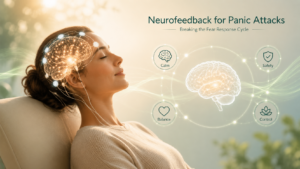
Neurofeedback is a type of biofeedback therapy that uses real-time brainwave monitoring to help individuals learn how to self-regulate their mental states. By placing small sensors on a child’s scalp, we can measure brain activity through EEG (electroencephalogram) technology. The child then engages with visual or auditory feedback, such as watching a movie or listening to music, which changes based on their brainwave patterns.
When the brain produces healthy, focused activity, the feedback encourages it to maintain those patterns. Over time, the brain learns to shift away from dysregulated states—such as excessive slow-wave activity often seen in children with ADHD—and move toward more stable and functional patterns. It’s similar to exercising a muscle: with practice, the brain becomes more efficient and better at self-regulation.
Neurofeedback is often paired with heart rate variability (HRV) training, which helps children develop better emotional regulation. By improving both brainwave patterns and the connection between the brain and the nervous system, neurofeedback creates lasting changes in attention, behavior, and mood.
How Neurofeedback Helps Children
One of the most common reasons parents explore neurofeedback is to support children with ADHD or attention difficulties. Research shows that many children with ADHD have an imbalance between slow brainwaves (theta) and faster brainwaves (beta). Neurofeedback gently retrains this imbalance, helping children become more focused, less impulsive, and better able to manage tasks without frustration. Studies have shown that after 30 to 40 neurofeedback sessions, children experience significant reductions in ADHD symptoms, sometimes with results that last six to twelve months or longer.
Beyond attention, neurofeedback can also help children struggling with anxiety, emotional dysregulation, or behavioral issues. When the brain is overly reactive, children may feel anxious, overwhelmed, or quick to anger. Neurofeedback sessions strengthen the prefrontal cortex, the part of the brain responsible for self-control, emotional balance, and executive functioning. As the brain learns to stay calm and focused, children naturally develop better resilience, reduced anxiety, and improved emotional responses.
At Bhakti Brain Health Clinic, we have seen children who once struggled with focus in school or had daily emotional outbursts begin to show remarkable improvements in their attention span, behavior at home, and overall confidence after completing a personalized neurofeedback program.
Is Neurofeedback Safe for Children?
Safety is always a top priority for parents, and understandably so. The good news is that neurofeedback is completely non-invasive and drug-free. It doesn’t involve any electrical stimulation or medication; it simply records and provides feedback on the brain’s natural activity. Decades of clinical research show that neurofeedback has no serious side effects.
Occasionally, children may feel a little tired after a session or have a temporary, mild headache, but these effects are rare and usually go away quickly. Compared to stimulant medications, which may affect appetite, sleep, or mood, neurofeedback is a gentler approach that focuses on helping the brain learn new, healthier patterns on its own.
What to Expect During Neurofeedback Training
When you visit Bhakti Brain Health Clinic for the first time, we start with a thorough consultation and an optional brain map (QEEG). This gives us a clear picture of which brain areas may be overactive or underactive. For example, children with ADHD often show higher-than-normal slow-wave theta activity in regions linked to attention.
After the assessment, we create a personalized neurofeedback protocol that matches your child’s unique brainwave patterns. Each session is designed to be relaxed and engaging. Your child might watch a movie, play a simple interactive game, or listen to music while the neurofeedback system provides gentle rewards whenever their brain produces the desired activity.
Sessions usually last around 30 to 45 minutes, and most children complete two to three sessions per week. Over time, the brain “learns” what optimal functioning feels like and begins to maintain these improved patterns even outside of training. After about 20 to 40 sessions, many families see lasting improvements in attention, self-control, and mood regulation.
At our clinic, we often combine EEG neurofeedback with HRV biofeedback, allowing children to train both their brain and nervous system. This integrated approach helps not only with focus but also with stress management and emotional balance.
Scientific Evidence Behind Neurofeedback
Neurofeedback is not just a wellness trend; it is backed by decades of research. Meta-analyses have shown that neurofeedback can produce medium to large improvements in ADHD symptoms, with remission rates ranging from 30 to 47 percent. In many studies, the benefits were comparable to stimulant medications but without the unwanted side effects.
For anxiety and mood disorders, neurofeedback has also shown promising results. Clinical trials demonstrate improved connectivity in the brain regions responsible for emotional regulation, such as the prefrontal cortex and limbic system. Children who previously struggled with excessive worry, intrusive thoughts, or difficulty calming down often experience noticeable relief after consistent training.
Why Families Choose Bhakti Brain Health Clinic
Bhakti Brain Health Clinic is dedicated to creating a supportive and child-friendly environment where neurofeedback is tailored to each child’s unique needs. We use advanced EEG technology and evidence-based protocols to ensure safe and effective training. Our team is highly trained in working with children and families, making sessions engaging and stress-free.
We also believe in tracking measurable progress. By reviewing before-and-after brain maps and behavioral reports, parents can see how their child is improving. Many families appreciate that neurofeedback not only addresses symptoms but also strengthens the brain’s core ability to self-regulate, offering long-term benefits that extend beyond the therapy sessions.
Final Thoughts
Neurofeedback therapy offers a gentle yet powerful way to support children struggling with ADHD, anxiety, behavioral challenges, or developmental concerns. By teaching the brain how to function more efficiently, children gain lasting improvements in focus, emotional regulation, and resilience.
At Bhakti Brain Health Clinic, we believe every child deserves the chance to reach their full potential without relying solely on medication. Our personalized approach combines brain mapping, neurofeedback, and HRV training to create meaningful changes that families can see and feel.
FAQs
1. Is neurofeedback effective for ADHD?
Yes. Research consistently shows that neurofeedback can significantly reduce ADHD symptoms, including inattention, impulsivity, and hyperactivity. The improvements are comparable to medication, with the added advantage of being drug-free.
2. Can neurofeedback help with anxiety in children?
Absolutely. By calming overactive brainwave patterns and improving emotional regulation, neurofeedback can reduce anxiety symptoms and help children feel more balanced.
3. How many sessions does my child need?
Most children complete between 30 and 40 sessions for lasting results. Some may see improvements sooner, but consistency is key to long-term change.
4. Is it painful or uncomfortable?
Not at all. Neurofeedback is completely painless. Children simply wear small sensors on their scalp while watching a movie or playing a game.
5. Will insurance cover neurofeedback therapy?
Coverage varies depending on your plan. Some insurance policies may reimburse part of the cost. We’re happy to help with documentation if needed.