Buy or rent our products online!

Perimenopause can affect concentration, mood, and sleep, sometimes leaving people with brain fog and anxiety that disrupt daily life. Neurofeedback uses real-time information about brain activity to guide training that aims to improve self-regulation. Here is more information on how neurofeedback works and what to evaluate when exploring it as a possible source of support during perimenopause:
How Does Neurofeedback Work?
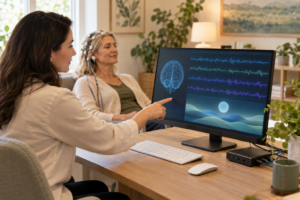
Neurofeedback gives a person information about brain activity as it happens. Sensors record signals during a session, and a computer uses the signals to change a visual display or sound. The person responds to the feedback while the provider follows a training plan. Clinics use different methods and often explain the steps before training begins.
Record and Display Activity
A provider places sensors on the scalp to collect electrical signals. During neurofeedback, you may watch an image change, follow a moving object, or hear a sound when the recorded activity meets a selected target. The display responds to the signals picked up during the session. It does not read thoughts, measure hormone levels, or show why a person has anxiety.
Some providers use a separate brain activity assessment when planning sessions. They may ask about sleep, attention, daily tasks, and existing health concerns before choosing a target. These details matter when someone has a history of ADHD, depression, PTSD, or a traumatic brain injury. A recording offers one kind of information, while the person’s account explains what is happening outside the clinic.
Practice With Feedback
Neurofeedback uses repeated feedback to give a person a chance to practice during sessions. The provider may adjust the training plan as sessions progress, depending on the method and the goals agreed on at the start. Ask what the feedback rewards, how the provider checks recording quality, and how they decide whether to continue. A clear explanation should connect the sessions to a practical goal, such as following a conversation or completing a work task.
Progress should include more than a change on a screen. If your concern is mental fatigue, track how long you can work before needing a break; if sleep is the concern, record nighttime waking. Neurofeedback results can vary; agreeing on a measure beforehand makes later discussions more useful.
What Happens To Focus?
Brain fog describes several experiences: losing a word, forgetting a detail, or needing to reread a page. Such concerns are common during perimenopause, although the changes some people notice are mild. Sleep, mood, and other health factors may also affect how someone thinks during the day. Neurofeedback may be discussed as an option, but a report of brain fog does not identify a training target on its own.
Specific examples give a provider more to work with. Someone with a long-standing learning difficulty may want to know whether a recent change differs from their usual pattern. Describe the task, the change, and when it began before asking what neurofeedback can address.
Brain fog also varies from day to day. A night of broken sleep may precede a difficult morning, but another day becomes harder even after adequate rest. Keeping a brief record can show whether the same problem repeats across different conditions. If memory or focus changes are clear, persistent, or disruptive, a qualified health professional can assess them.
Can Anxiety Heighten Alertness?
Anxiety during perimenopause may appear as recurring thoughts, restlessness, or difficulty settling after a demanding moment. Hot flashes and night sweats may occur alongside anxiety, while stress and sleep changes can complicate the pattern. Mood symptoms may relate to hormone changes, but the precise connection remains uncertain.
Before discussing neurofeedback, describe what being “on alert” means in your day. Do thoughts keep returning after a conversation, or does physical tension appear without a clear worry? Note how long an episode lasts, what happened beforehand, and whether it affects work or rest. A provider can then explain whether a proposed training plan relates to that specific concern.
Existing anxiety, PTSD, or depression also belongs in the discussion. A new pattern may overlap with an established condition, and the timing of perimenopause cannot separate them on its own. Ask what evidence supports the particular neurofeedback method offered for anxiety and how the provider would track your experience.
What Affects Sleep and Regulation?

Sleep can become less predictable during perimenopause. Some people fall asleep without difficulty but wake after a night sweat, while others remain awake as thoughts continue. Neurofeedback is sometimes discussed for sleep concerns, though research on its effects is mixed. Here are ways to monitor sleep and identify disruption:
- Falling asleep: Record when you go to bed and roughly how long you remain awake. Note whether anxiety or another interruption begins first.
- Waking overnight: Track night sweats, the time you wake, and what happens afterward. This can clarify whether your main concern is the interruption or the difficulty returning to sleep.
- Morning rest: Write down whether you feel rested and how you function during the first part of the day. Time in bed may not tell the whole story.
- Daytime effects: Identify tasks that become harder after a disrupted night. These examples can help you assess whether a support plan addresses a meaningful goal.
- Take the sleep record to a qualified professional when interruptions persist or affect your day. If you ask about Neurofeedback, find out which sleep concern the proposed sessions target and how progress will be reviewed.
Explore Neurofeedback for Anxiety
Neurofeedback provides real-time feedback from recorded brain activity, and some people explore it when brain fog, anxiety, or sleep changes affect daily life. Provide specific examples of what has changed and ask how a provider will assess progress. Contact a reputable brain health clinic near you to book your appointment and explore neurofeedback for anxiety today.