Buy or rent our products online!

Neurofeedback, Brain Stimulation, and Biofeedback: How Are They Different?
Neurofeedback, brain stimulation, and biofeedback are often discussed together, but each works differently. Neurofeedback provides information about brain activity during training, brain stimulation applies an external signal, and biofeedback helps people observe signals such as breathing or heart rate. Understanding these differences can help you ask more informed questions as you explore your options.
Training Activity With Neurofeedback
Neurofeedback is a form of biofeedback focused on brain activity. Sensors placed on the scalp record electrical signals, and a computer turns selected parts of that recording into visual or sound feedback. During a training session, the person follows the feedback. Providers use different equipment and training methods, so the experience varies between clinics.
Activity Recording and Display
During a typical neurofeedback session, you may watch a moving image or listen to sounds while sensors record signals from your scalp. The display changes according to a target chosen for the training. You do not need to identify individual brainwaves as they appear, but the provider should explain what the display responds to. The sensors used to record activity serve a different purpose from electrodes used to deliver electrical stimulation.
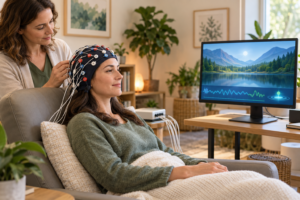
Some providers review a separate recording of brain activity before planning neurofeedback. They may also ask about sleep, attention, stress, and the tasks you want to handle more easily. If you have ADHD, PTSD, or a history of brain injury, share what has changed from your usual pattern. That history gives the provider context for interpreting a recording and discussing your goals.
Feedback With Practice
Neurofeedback involves repeated practice while the system responds to the recorded signals. You try to keep a display moving smoothly, although the exact task depends on the method. The provider can explain how the feedback relates to the activity being tracked and when they will review the plan. A practical goal, such as following a meeting or completing a reading task, also gives you a way to discuss your experience outside the session.
Training plans differ in the number and length of sessions. Ask how progress will be tracked before you begin, especially if you have several concerns. A change in a screen display describes what happened during training, while your day-to-day examples show whether the plan addresses your goal.
Applying Energy Through Stimulation
Brain stimulation uses a device to apply energy rather than asking a person to respond to feedback from a recording. Depending on the method, a device may use an electrical current or a magnetic field. Transcranial direct current stimulation sends a weak electrical current through electrodes placed on the scalp. Different stimulation methods use different equipment and procedures, so the term brain stimulation does not describe a single service.
A session may involve positioning electrodes or another device before the provider starts a preset program. The person generally does not control that program by watching a live display of their brain activity. Ask what form of energy the device uses, how the provider selects its settings, and what to expect during the appointment.
A clinic may discuss stimulation and neurofeedback within the same plan. One applies energy according to a protocol, and the other provides feedback during practice. If a provider recommends both, ask why each appears in the plan and how the sessions relate to your stated goal.
Tracking Signals With Biofeedback
Biofeedback is the broader name for methods that measure a body signal and display it to a person. A session may track breathing, heart rate, or muscle tension, depending on the equipment and the goal. You then use the feedback while practicing an action, such as changing your breathing pace. Neurofeedback fits within this broader category because it uses recorded brain activity as the signal.
Heart rate variability biofeedback is an example. A sensor tracks changes in the time between heartbeats, and a display lets you observe the pattern while you breathe at a guided pace. The focus is the measured heart pattern and your breathing practice. It differs from neurofeedback, which uses signals recorded from the scalp.
Muscle tension biofeedback uses another kind of signal. A provider may place sensors over muscles so you can see changes in tension during an exercise. The choice of signal depends on what the provider and client want to observe and practice. Ask which body function the session tracks so you know what the display actually represents.
Comparing Each Experience
The three terms can overlap in a clinic’s service description. The best way to compare them is to ask what the device does and what the person does during the session. Each approach uses different equipment, feedback, or settings. This quick comparison separates the main actions:
- Neurofeedback: Sensors record brain activity, and a display or sound responds to selected signals.
- Brain stimulation: A device applies energy, such as a weak electrical current or magnetic pulses, and the provider selects the method and its settings.
- Biofeedback: Sensors record a body signal, such as breathing, heart rate, or muscle tension, and the person observes the feedback while practicing a related skill.
Discussing the Right Fit

A discussion about fit starts with the concern that brought you to the clinic. A person seeking support after a traumatic brain injury may have a different history. Bring specific examples, then ask how the proposed service relates to them. Here are some key tips for discussing the right fit:
- Name your goal: Describe a task or routine you want to handle more easily.
- Ask what the device measures or applies: Find out whether the session records brain activity, tracks a body signal, or delivers stimulation.
- Review the session steps: Ask what you will do, how long the appointment takes, and how the provider selects the approach.
- Plan how to track progress: Choose everyday observations that relate to your goal, such as completing a task or managing interruptions.
- Discuss your history: Share existing diagnoses, medications, and previous care so the provider has the context needed for a recommendation.
Schedule Your Neurofeedback Consultation
Neurofeedback uses feedback from brain activity, brain stimulation applies energy, and other forms of biofeedback display body signals. The right discussion begins with your goals and the details of the method a provider proposes. Bring examples of the tasks or routines you want to address. Contact a reputable brain health clinic near you to schedule your neurofeedback consultation and discuss the approach that fits your needs.