 Buy or rent our products online!
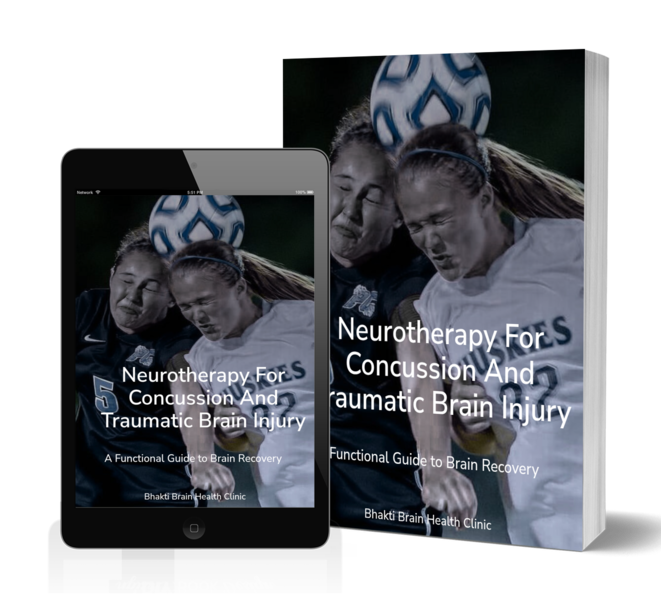
A concussion, also known as a mild traumatic brain injury (mTBI), is a disruption in normal brain function caused by an external force, usually a blow, jolt, or sudden movement of the head. It doesn’t require a loss of consciousness, external bleeding, or even a direct impact to the head. What defines a concussion is not what can be seen on the outside, but what happens on the inside of the brain, particularly how its delicate tissues stretch, twist, or become chemically imbalanced.
At its core, a concussion is a functional injury. Rather than damaging brain structures in ways that are always visible on a scan, it disturbs how neurons fire, how networks synchronize, and how the brain communicates with itself and the body. These disruptions can have cascading effects across cognitive, emotional, and physical domains.
While it is termed “mild,” the reality is that the impact on daily life can be anything but that. Many individuals struggle for months, or even years, without proper understanding, diagnosis, or care.
Despite decades of research, misconceptions about concussions persist. One of the most damaging is the idea that a concussion is simply a bump to the head that resolves with rest. In truth, concussions can have long-lasting physiological, neurological, and psychological effects, especially when unrecognized or untreated.
Common myths include:
In actual fact, most concussions do not involve loss of consciousness.
Rapid acceleration-deceleration (as in whiplash) can cause a concussion without direct impact.
Many standard imaging tools fail to detect functional changes associated with concussion.
While initial rest is important, prolonged inactivity can slow recovery if not paired with appropriate therapy.
The reality is that concussions are neurophysiological injuries, not always structural ones, and they require more than time to heal effectively.
No two concussions are exactly alike. The symptoms depend on the force, the part of the brain affected, and the individual’s pre-injury baseline. Some may experience cognitive fog, others emotional volatility, and still others physical impairments such as headaches or balance problems.
Common post-concussion symptoms include:
 Some individuals may experience just one or two of these symptoms, while others may experience many. In some cases, symptoms worsen over time or appear delayed. It’s important to note that symptoms may stem not just from the injury itself, but also from the nervous system’s dysregulated response to it.
This variability is one of the reasons that concussion is so often overlooked or misdiagnosed; it does not present in a predictable or uniform way.
Standard imaging techniques, such as CT scans, MRI, and even PET scans, are powerful tools, but they primarily detect anatomical abnormalities, including bleeding, swelling, or structural damage. Because concussions are often functional disruptions, not structural injuries, they may not show up at all on these scans.
This limitation leads to one of the most common frustrations for patients: being told “everything looks normal” when they continue to feel far from it.
Even when more advanced imaging like diffusion tensor imaging (DTI) or functional MRI is used, it often lacks the resolution or specificity needed to detect micro-level dysregulation in real-time.
At BBHC, this gap is addressed through functional neuroimaging, including quantitative EEG (QEEG) and event-related potentials (ERP). These tools enable clinicians to observe how the brain functions, not just what it looks like. They offer key insights into patterns of dysregulation, connectivity, and neurophysiological coherence that traditional scans cannot reveal.
In other words, where structural imaging examines the hardware, functional neuroimaging focuses on the software. And it’s the software, how the brain communicates, that so often needs repair after concussion.
Understanding a concussion or traumatic brain injury begins with asking the right question, not “What does the brain look like?” but rather, “How is the brain functioning?” Traditional diagnostic tools often fall short because they examine only structure. Functional injuries, those that affect how neurons communicate, fire, and coordinate, require a functional approach to diagnosis.
At Bhakti Brain Health Clinic, the foundation of concussion assessment lies in evaluating brain function at the level of electrical activity and neurophysiological response. This chapter outlines the key tools used in that process and why a comprehensive, data-driven model is fundamental for effective treatment planning.
 When someone sustains a head injury, medical imaging is usually the first step in care. CT scans and MRIs rule out critical structural issues such as bleeding, fractures, or swelling. These scans are key for emergency medicine, but often yield no findings in mild or moderate concussions.
That’s because concussions rarely cause the type of gross anatomical damage these tools are designed to detect. The issue lies not in the hardware of the brain, but in the communication networks; the speed, timing, and coherence of electrical signaling between brain regions.
This is where functional neuroimaging becomes indispensable. At BBHC, two primary tools are used to map and evaluate these disruptions: Quantitative EEG (QEEG) and Event-Related Potentials (ERP).
QEEG is the process of measuring and analyzing brainwave activity across multiple regions of the brain. While a traditional EEG is useful for identifying seizures or overt abnormalities, QEEG allows clinicians to compare a client’s brainwave patterns to a normative database of healthy individuals. This comparison reveals areas of excess activity, deficiency, or dysregulation.
Key features of QEEG:
One of the most striking QEEG findings seen in individuals with concussion is what’s colloquially referred to as “Blue Brain”, an EEG pattern marked by low- voltage, under-functioning neural networks. Other patterns include excess slow- wave activity (delta and theta) or spindling fast-wave activity (beta) in localized areas, all of which can point to disruption following injury.
While QEEG doesn’t “diagnose” concussion in a binary way, it provides a powerful map of the terrain, revealing the where, what, and how of brain dysfunction.
ERP testing measures the brain’s electrical response to specific stimuli, such as sights, sounds, or cognitive tasks. While QEEG shows the brain at rest, ERP examines the brain in action. It measures how quickly and efficiently the brain processes information and responds to events in real-time.
Benefits of ERP:
When used together, QEEG and ERP offer a dynamic picture of brain function. One shows the terrain; the other reveals how well traffic is moving through it.
While QEEG and ERP are invaluable tools, they are not without limits. EEG cannot definitively prove that a concussion caused an abnormality; it can only suggest dysregulation that aligns with known patterns of post-concussive brain injury.
Strengths:
Limitations:
For this reason, BBHC emphasizes a multi-domain model, combining EEG data with client history, symptom profiles, behavioral measures, and, in some cases, genetic or metabolic testing.
Effective concussion care does not rely on a single tool. Instead, it draws on a network of information, from the client’s lived experience to their physiological markers, to form a coherent and actionable understanding of the injury.
At BBHC, each assessment is:
This approach moves beyond guesswork and symptom chasing. It creates a roadmap for functional recovery, giving clinicians and clients alike the confidence that they are working with the brain, not just the behavior.
Curious about your brain’s electrical patterns? Schedule a QEEG and ERP evaluation to get a personalized map of your brain’s function.
A concussion may be labeled “mild,” but its effects can trigger profound changes at the cellular and systemic level of the brain. These changes are not usually visible on a scan, nor are they always immediate. In many cases, symptoms develop over days, weeks, or even months, driven by a cascade of biochemical disruptions, energetic deficits, and neuroinflammatory processes. These impair the brain’s ability to function and regulate itself.
Understanding the physiology of injury allows clinicians to not only explain symptoms but also target them at the source. Let’s explore what happens inside the brain after a concussion and introduce key concepts that guide treatment decisions in a functional neurotherapy model.
When the brain experiences sudden acceleration or impact, it responds with more than just mechanical motion. An electrochemical shockwave disrupts the delicate balance of ions and neurotransmitters required for normal brain function.
Sodium-Potassium Pump Disruption
The sodium-potassium pump is a cellular mechanism responsible for maintaining the electrical stability of neurons. It moves sodium ions out of the cell and potassium ions into the cell, allowing neurons to reset after firing and prepare for the next signal.
After a concussion, this pump becomes disrupted due to mechanical strain and sudden depolarization. The result is an imbalance in electrical gradients, leaving neurons either hyper-excitable (firing too easily) or hypo-responsive (not firing at all). This alone can affect cognitive clarity, attention, and emotional regulation.
Calcium, Glutamate, and Mitochondrial Dysfunction
A key effect of concussion is the excessive release of glutamate, a primary excitatory neurotransmitter. When glutamate floods the brain, it causes overactivation of neurons and an influx of calcium ions into cells.
This calcium overload damages mitochondria, the cell’s energy producers, disrupting their ability to generate adenosine triphosphate (ATP), the energy currency of the brain. Mitochondrial dysfunction weakens the brain’s capacity for self-repair and slows down every process from neural firing to waste clearance.
The result is a brain running low on fuel and overloaded with demand, a recipe for chronic symptoms and delayed recovery.
Oxygen and Glucose Deficits, ATP Failure
Following the disruption of the sodium-potassium pump and mitochondrial activity, the brain enters a state of energy crisis. Oxygen and glucose metabolism decline, ATP production falters, and neurons begin to operate in survival mode.
This energetic shortfall can last for days or even weeks, depending on the severity of the injury and the individual’s baseline resilience. During this time, the brain is vulnerable to secondary insults; even mild exertion or emotional stress can exacerbate symptoms.
Left unaddressed, this deficit can evolve into a chronic low-energy state, contributing to long-term fatigue, cognitive sluggishness, and impaired motivation.
Neuroinflammation and Chronic Dysregulation
In parallel to the metabolic cascade, concussion often triggers a prolonged neuroinflammatory response. As the brain detects injury, it sends immune cells to the affected areas to contain damage and initiate repair. In an ideal scenario, this inflammation is short-lived and resolves on its own.
In many individuals, the inflammation often becomes chronic. This can result from repeated injuries, inadequate healing, or disruptions in the brain’s immune regulation. Neuroinflammation is known to interfere with neurotransmission, promote cellular toxicity, and prolong symptoms of depression, anxiety, and cognitive decline.
Inflammation can generate false signals of continued danger in the nervous system, locking the brain into patterns of hypervigilance, dysregulation, or shutdown. From a clinical standpoint, this shows up as mood instability, impaired sleep, sensory sensitivity, and a delayed or blunted response to therapeutic interventions.
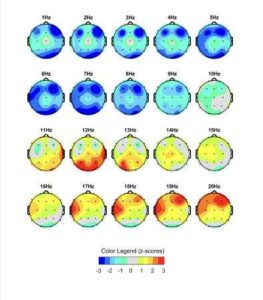 One of the most common functional brain patterns seen in post-concussion assessments is informally known as “Blue Brain.”
In quantitative EEG (QEEG) maps, this term refers to widespread regions of low voltage, which are visually depicted in cool tones (blue and green) that contrast with the normative average. A “blue” map usually indicates a generalized suppression of neural activity, often associated with poor signal strength, low metabolic energy, or disrupted connectivity.
This is not a diagnosis, but a functional fingerprint —a marker of how the brain is operating beneath the surface.
Blue Brain may manifest in symptoms such as:
It’s important to note that not all individuals with TBI will present with this pattern, and not all Blue Brain findings are directly attributable to the injury. However, in the context of a concussion history, Blue Brain often correlates with clinical impairment and helps guide the focus of neurofeedback and neuromodulation protocols.
The takeaway is clear: concussion is not a singular event, but a cascading system failure that affects electrical, chemical, and metabolic systems in the brain. Recognizing and addressing this complexity is what allows true healing to begin.
Once a concussion has triggered dysfunction in the brain’s electrical and biochemical systems, healing requires more than time; it requires targeted intervention. The challenge is that traditional treatments for concussion often focus on symptom management alone: medications for headaches, rest for fatigue, or therapy for mood disruption.
While those interventions can play a role, they don’t always address the underlying dysregulation in the brain’s networks. At Bhakti Brain Health Clinic the goal is not just to reduce symptoms, but to help the brain reorganize itself, reestablish balance, restore energy ow, and improve communication betwee regions. This is where neurotherapy comes in.
This chapter outlines the core tools used at BBHC to support concussion and recovery. These interventions are safe, non-invasive, and evidence-informed, designed to help the brain not only function, but thrive.
Neurofeedback is a brain training technique rooted in operant conditioning. It involves monitoring the brain’s real-time electrical activity (via EEG) and providing instant feedback to encourage more ef~cient patterns.
Here’s how it works:
Neurofeedback is especially helpful for:
Each protocol is customized based on QEEG data and symptom p making sure that the training aligns with the individual’s unique b goals.
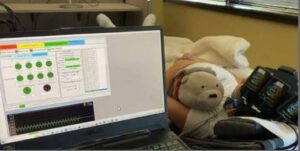 While neurofeedback trains the brain through learning, neurostimulation enhances physiological function directly. Techniques like transcranial electrical stimulation (tES) and pulsed electromagnetic ~eld stimulation (PEMF) deliver mild, non-invasive pulses to speci~c brain regions to improve:
When the brain produces desired patterns (e.g., increased focus, wave activity), the feedback rewards that pattern by making the clearly or the sound becomes more audible.
Over time, the brain learns to repeat those healthier patterns on
Neurostimulation is particularly effective for:
These methods are painless and well-tolerated, and when applied systematically, they provide a physiological foundation upon which other therapies can build.
Photobiomodulation (PBM), also known as infrared light therapy, uses spe wavelengths of near-infrared light to penetrate the skull and inuence cell function in the brain. This light is absorbed by cytochrome c oxidase, an en in the mitochondria that plays a key role in energy production.
When stimulated by light, the mitochondria increase ATP output, reduce oxidative stress, and enhance cell-to-cell signaling, all of which are disrup concussion.
PBM has been shown to:
Because it is non-pharmaceutical and has minimal side effects, PBM is a powerful adjunct for clients with lingering symptoms, chronic fatigue, or m changes following a TBI.
 Audio-Visual Entrainment (AVE) is a technique that uses rhythmic pulses of light and sound to guide the brain into more regulated brainwave states.
Unlike neurofeedback, which trains the brain through feedback, AVE entrains it, inviting the brain to synchronize with external frequencies.
During a session, the client wears special goggles and headphones that deliver:
AVE can help:
It is bene~cial as a daily at-home protocol, and often serves as a bridge between formal sessions in the clinic.
While some interventions require clinical supervision (like QEEG-guided neurofeedback or certain forms of neurostimulation), many clients at BBHC also use home-based tools to reinforce and extend their treatment.
Home-use options may include:
These tools provide exibility, conti which can be fundamental for those
However, at-home use is most effec guidance. BBHC clinicians tailor pro adjustments as the brain heals, mak effective.
Every brain injury is unique. The mechanisms may be similar: rotational force, metabolic cascade, and inflammation, but the human experience is deeply individual. One of the most powerful aspects of functional neurotherapy is its ability to tailor its approach to the specific needs of each individual and their unique story.
At Bhakti Brain Health Clinic, progress is measured not only by brain maps and metrics, but also by the return of agency, vitality, and selfhood. This chapter presents four real-world case studies drawn from clinical practice, each illustrating how dysregulation presents and how targeted neurotherapy can foster meaningful transformation.
This client arrived at the clinic with a long-standing history of chronic depression. Despite decades of standard care, medications, psychotherapy, and various interventions, she had not found lasting relief. She approached BBHC as a last resort, hoping for even modest improvement.
Her QEEG showed a classic “Blue Brain” pattern: widespread low voltage across multiple regions, indicating systemic underactivation. A statistical analysis of her brain activity suggested a 99.9% likelihood of traumatic brain injury, although she had no reported history of TBI.
Only after deeper inquiry did a forgotten incident emerge: a fall while skating in her youth that had resulted in hospitalization. No one at the time had labeled it a concussion, but the correlation with her depression onset was clear.
Treatment involved:
Despite initial skepticism, significant physiological and psychological changes emerged after several sessions:
As her autonomic regulation improved, so did her emotional state. She became more social, resumed exercise and cooking, and began experiencing herself as “motivated” for the first time in years. The return of function and vitality was both measurable and deeply meaningful.
This young man had sustained severe head trauma at age 13 after going over his bicycle handlebars and landing on his face. He endured extensive facial fractures, lost teeth, and underwent reconstructive surgery. Over the following years, he withdrew completely from life, spending most of his time in a dark room playing video games.
His parents had taken him around the world for treatment, trying every option available: orthopedic, psychological, neurological. Nothing had shifted the trajectory. He presented at BBHC in his late teens, largely non-verbal and emotionally flat.
Over the course of nearly 80 neurofeedback sessions, slow but profound changes began to emerge:
As neurophysiological coherence increased, his life began to undergo a transformation. He secured a job, began traveling, reconnected with his peers, and rediscovered his passion for painting. His artwork, both before and after treatment, showed a clear shift in emotional depth and complexity.
His brain map had shown excess slow-wave activity (delta and theta) and widespread dysrhythmia, classic concussion markers. Over time, those patterns shifted toward greater symmetry and regulation.
This client was a 40-year-old mother and working professional, referred to BBHC one and a half years after a motor vehicle accident resulted in a traumatic brain injury. Despite previous therapies, she continued to experience:
Her QEEG showed lateralized slow-wave activity in the temporal lobes, excess fast beta spindling, and a cycling pattern of wakefulness and stage-one sleep, suggesting persistent dysregulation. Treatment included:
Over approximately 40 sessions, she began to notice:
Most importantly, she reported a growing sense of returning to herself: “I feel like me again.” Her parenting improved, her work capacity increased, and her sense of internal order was restored.
This young client came to BBHC with a complex history of emotional dysregulation, anxiety, and executive dysfunction. She had recently sustained a concussion from a soccer injury, and over the course of training, she suffered two additional concussions, each formally diagnosed.
She had long-standing challenges even prior to the concussions, but these injuries appeared to significantly exacerbate her symptoms, including:
Her QEEG revealed “Blue Brain” patterns, excess slow activity, and elevated gamma in the insula, likely contributing to both emotional volatility and sensory overwhelm.
Her care plan included:
Her parents, who tracked her progress closely, reported significant improvements within weeks:
By the end of her initial treatment cycle, her mother shared: “She can be her true self now. It seems to be nothing short of a miracle.”
 These case studies are more than anecdotes; they are evidence of what’s possible when brain-based dysregulation is treated at its source. While recovery is rarely linear, it is achievable, even when hope feels distant.
Your story isn’t over. If you see yourself, or a loved one, in these stories, know that change is possible. Contact Bhakti Brain Health Clinic to begin a new chapter in your healing journey.
Healing from a brain injury requires more than a general approach. It demands a clear, personalized plan, one that honors the individuality of the injury and the person behind it. At Bhakti Brain Health Clinic, the treatment journey is guided by a structured yet flexible process designed to assess function, identify targets, and support recovery through regulation.
This chapter outlines the clinical process from intake to implementation, detailing what clients can expect and what they need to succeed.
The foundation of the Bhakti protocol is clarity through comprehensive assessment. Whether a client arrives with a recent concussion or lingering symptoms from an injury years prior, the first step is always to map the brain’s function and listen to the client’s lived experience.
The intake process includes:
This multidimensional approach makes sure that the treatment plan is based on objective data, observed behavior, and client priorities.
The QEEG provides a snapshot of functional brain patterns, highlighting underactive regions, dysregulated networks, or “Blue Brain” patterns. The ERP measures timing, processing speed, and how the brain responds to input, offering a dynamic view of cognitive performance.
These tools, combined with clinical insight, form the basis of a thorough report of findings, a document that can exceed 200 pages, rich in visual maps and neurophysiological insights.
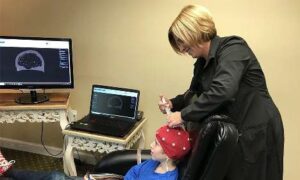 Once the assessment is complete, the team designs a custom treatment plan. No two protocols are the same; plans are tailored to match the individual’s unique brain patterns, goals, and life context.
Key elements of the plan include:
Pacing is adjusted based on client responsiveness. Some clients benefit from intensive work over a short period; others progress more steadily over time.
The care plan is collaborative and adaptive. Progress is continually monitored through clinical observation, follow-up assessments, and feedback from the client and their support system.
Each session at BBHC is structured yet responsive to individual needs. A standard in-clinic neurotherapy session may include:
Sessions typically last between 45 and 75 minutes, depending on the therapies being used. For clients using at-home tools like audiovisual entrainment or infrared helmets, guidance is provided to aid safe and effective implementation.
Clients are never passive recipients. Each session is an interactive process, rooted in learning and adaptation. Over time, as the brain begins to self-regulate more effectively, the client’s awareness of change deepens.
Concussion recovery is not a quick fix, but with consistency, it is a highly achievable goal. Clients who succeed in neurotherapy often share several characteristics:
 Clients are reminded: Your brain is capable of change even if the injury was years ago. Even if other treatments didn’t work. The path forward isn’t about perfection—it’s about progress and regulation, guided by real data and compassionate care.