Buy or rent our products online!

What Does a QEEG Reveal?
Perimenopause causes changes in sleep, focus, and mood that are difficult to describe from symptoms alone. A quantitative EEG, or QEEG, records brainwave activity and may show patterns that help a clinician assess how the brain is functioning. These findings can inform a discussion about symptoms and whether neurofeedback may be appropriate as part of a broader support plan.
Recording Brain Activity
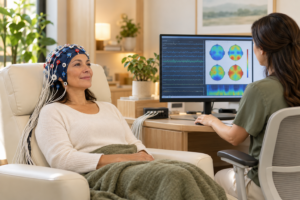
A QEEG begins with an electroencephalogram, often shortened to EEG. A provider places sensors on the scalp to record electrical signals while you sit through a series of recording periods. You may be asked to keep your eyes open for part of the session and closed for another part. The sensors collect signals; the computer then analyzes features of the recording and may present them as graphs or colored maps.
Recording conditions matter. Eye movements, facial muscle tension, and other movements can affect the signals, so the person reviewing a QEEG must check the underlying recording before interpreting a map. Age, alertness, medication, and other factors can also affect what appears. Clinical guidance stresses reviewing quantitative results alongside the original EEG data and relevant personal information.
A brain map shows measurements made during the recording. It cannot diagnose anxiety, ADHD, PTSD, or cognitive impairment on its own. Understanding these limits helps you decide whether QEEG or neurofeedback belongs in a broader assessment.
Examining Brainwave Patterns
Brain activity changes as a person rests, pays attention, or moves between tasks. A QEEG can describe several features of the recorded signals, and a provider compares some measurements with a reference group. The meaning of a difference depends on recording quality and the person’s circumstances. Here are several terms you may hear when reviewing a map:
- Speed: Brainwaves can cycle at different rates. A report may describe a slower or faster pattern in a particular area, but speed alone does not explain a symptom.
- Strength: A QEEG can measure how prominent a pattern appears. The provider should explain what the measurement represents and whether the recording supports a reliable comparison.
- Location: A map can show where sensors picked up a pattern on the scalp. The display does not directly show thoughts.
- Timing between areas: Some reports compare how signals from different sensors vary together. This describes a relationship in the data.
- Reference comparisons: A report may compare results with recordings from people of a similar age. Ask how the provider accounts for your individual history.
Connecting Findings With Symptoms
Perimenopause involves sleep changes, difficulty concentrating, or problems recalling words and names. These experiences vary by person, and other factors may contribute. A person who already manages ADHD, depression, or the effects of a traumatic brain injury may also have an established pattern of difficulty with attention. A useful assessment compares what happens now with what was usual before the recent change.
A provider can review a QEEG alongside specific examples from daily life. The questions below can help connect a measurement with the concern that led you to seek support:
- When did the change begin? Note whether difficulty focusing appeared alongside changes in periods, sleep, or daily demands.
- What happens during a typical day? Describe a task you lose track of, such as following a meeting or completing several steps in order.
- How does sleep fit in? Record whether the problem stands out after nighttime waking or remains similar after a more restful night.
- What was already present? Share existing diagnoses, past injuries, and familiar attention patterns so a provider can identify what is new.
- What result would matter to you? Choose a practical goal, such as reading without repeated restarts or following a conversation.
These details help a provider decide whether an observation deserves discussion and whether another issue needs assessment. A parent or caregiver exploring neurofeedback for a loved one can use the same approach; provide examples of daily difficulties and ask what each test can tell you. The goal is a clear account of the person’s experience, supported by measurements where they add value.
Discussing Neurofeedback Options

Neurofeedback uses feedback from recorded brain activity during training. A person may watch a display or listen to sounds that change as the system responds to selected signals. Some providers review a QEEG when planning this training, while others use different approaches. Before beginning, ask how the proposed neurofeedback sessions relate to the symptoms you described.
Understand the Training Plan
A provider should explain which activity the system will use for feedback and what you will do during a session. Ask how often the plan will be reviewed and whether it may change based on your experience. If a QEEG helped shape the plan, request a plain-language explanation of that link. Neurofeedback methods differ, so the service details matter.
A useful plan also includes a way to track everyday functioning. You can record how often you lose your place at work, how long it takes to resume a task, or how frequently sleep interruptions affect the next day. These measures give you something concrete to discuss at a follow-up. Interpret changes on a later brain map alongside what you notice in daily life.
Ask About Evidence and Limits
Ask what evidence supports the particular neurofeedback approach offered for your concern. A study of a related approach reported changes in several symptoms. That makes it helpful to discuss uncertainty, expected costs, and when you would review the plan.
If you seek neurofeedback for focus or mental stamina, name the task you want to handle more easily. An executive may want to follow a long meeting, while an artist often wants to sustain attention through a work session. A clinician referring someone can likewise ask how the provider will share findings and track the stated goal. The QEEG can be one source of information in that discussion, but its value depends on careful interpretation.
Book Your Neurofeedback Appointment
A QEEG describes brainwave activity recorded during a session, and a provider uses these measurements when discussing neurofeedback. The map gains context from your symptoms, sleep, health history, and daily goals. Ask what the findings show, what they cannot establish, and how proposed training would be reviewed. Contact a modern brain-based clinic in your area to book your neurofeedback appointment and discuss whether brain mapping is a fit for your concerns.