Buy or rent our products online!
Have you ever watched your child struggle with focus issues, unexplainable mood swings, or lingering anxiety?
Have you ever watched your child struggle with focus issues, unexplainable mood swings, or lingering anxiety, and wondered if there was a more personalized way to understand what’s really going on in their mind? If so, you’re not alone. Thousands of parents face the uncertainty of identifying the root causes of their children’s developmental and emotional concerns. Fortunately, there’s an emerging set of technologies that provide real, data-driven insights into your child’s brain activity: QEEG brain mapping and ERP assessment. Here at Bhakti Brain Health Clinic, we combine these innovative tools with personalized child treatment protocols—offering hope and clarity for families when they need it most.
In this blog post, we’ll explore how QEEG brain mapping and ERP assessment can be powerful catalysts for creating a customized approach to your child’s care. We’ll share how these methods go beyond traditional evaluations, highlight real-world benefits, and reveal why families are choosing Bhakti Brain Health Clinic for holistic neurotherapy and beyond. Whether you’re a concerned parent, an educator, or simply curious about new mental health technologies, read on for insights that might just transform how you see your child’s brain—and their future.
1. Understanding QEEG Brain Mapping and ERP Assessment
Before we explore why these tools are game-changers, let’s define the basics. QEEG brain mapping, or Quantitative Electroencephalography, is a method that records and analyzes electrical activity in the brain. Think of it as a GPS for the mind, showing us areas of underactivity or overactivity. Meanwhile, ERP assessment—short for Evoked Response Potentials—measures the brain’s electrical response to specific stimuli, like a sound or a flash of light. This technique focuses on how effectively (and quickly) the brain processes information, which is particularly valuable when dealing with attention issues or sensory integration challenges.
At Bhakti Brain Health Clinic, we take these readings and translate them into actionable insights. Instead of relying on generalized questionnaires or broad clinical observations alone, we gather concrete data about your child’s brain function. That data then becomes the foundation for a truly personalized child treatment plan, guiding everything from therapy sessions to at-home strategies.
Real-Life Example: Tim’s Breakthrough
Consider Tim, a 10-year-old who struggled with impulsivity and restlessness. Traditional therapy methods provided some relief, but it wasn’t until a QEEG brain mapping revealed significant overactivity in the frontal lobe—an area linked to impulse control—that his therapist at Bhakti Brain Health Clinic could precisely tailor interventions. ERP assessment further illuminated how Tim’s brain reacted slowly to certain auditory cues, prompting additional, targeted exercises. Today, Tim’s focus and classroom behavior have markedly improved, all thanks to these scientific insights.
2. Why Personalized Child Treatment Matters More Than Ever
Every child is unique, and their brains follow suit. A one-size-fits-all approach might overlook specific neural patterns that could be key to understanding emotions and behaviors. For instance, two children with the same ADHD diagnosis might have very different brainwave imbalances on a QEEG. One could show excessive theta waves in the frontal region, while the other might experience irregular beta waves linked to anxiety. Without advanced imaging and measurement tools like QEEG brain mapping and ERP assessment, these individual differences remain hidden.
At Bhakti Brain Health Clinic, we believe that more precise knowledge of your child’s unique neuroprofile leads to better outcomes. This is where holistic neurotherapy comes into play. Contrary to guess-based interventions, holistic neurotherapy (as we practice it) uses real-time data to pinpoint what’s genuinely happening inside each child’s mind. The result? Fewer generalized treatments and more customized sessions that accelerate transformation.
Expert Insights from Clinical Research
According to emerging neuroscience studies, personalized neurotherapy approaches can significantly reduce the trial-and-error phase that often frustrates both parents and children. Researchers have found that combining QEEG brain mapping with ERP assessment not only highlights core imbalances but also tracks how well a child responds to a given therapy model. When you can measure success in real-time, you can adapt quickly, optimize interventions, and ultimately boost the child’s engagement and self-confidence.
3. Bringing Data to Life: How Customized Treatment Evolves
So, how exactly does Bhakti Brain Health Clinic take this data and translate it into action? After the initial mappings and assessments, our team sits down to analyze the patterns. We look for indicators of stress, inattention, anxiety, or sensory overload. Once we identify these neural signatures, we begin crafting an individualized plan—often blending neurofeedback, cognitive-behavioral techniques, and holistic neurotherapy sessions where needed.
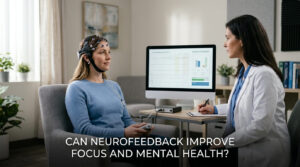
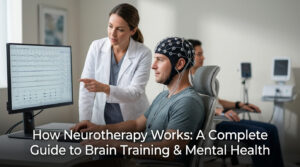
Neurofeedback, in particular, helps the brain learn to self-regulate by providing instant feedback on brainwave activity. Paired with insights from ERP assessment, we can specifically target disruptions in sensory processing or attention. Regular check-ins and repeat QEEG brain mappings allow us to measure progress. If we notice a particular area is still lagging behind, we adjust. This continual, data-driven cycle ensures that every step your child takes is purposeful and supported by current, research-backed information.
On-the-Ground Perspective
Parents often mention how reassuring it is to see visual representations of their child’s brain data. Rather than feeling in the dark or relying solely on subjective reports, they gain confidence in a treatment pathway that’s grounded in tangible evidence. Children, too, benefit from seeing their progress. Something as simple as watching their “brain scores” improve can serve as a powerful motivator, transforming therapy from something scary or tedious into an exciting challenge.
The Benefits at a Glance
- Targeted Interventions: Zero in on the exact brain regions or cognitive processes that need support.
- Reduced Guesswork: Minimize trial-and-error cycles by relying on real-time data and measurable brainwave patterns.
- Dynamic Adjustments: Make ongoing tweaks to therapy plans based on fresh insights, ensuring consistent improvement.
- Enhanced Engagement: Involve children in their own progress by showing them real changes happening in their brains.
- Holistic Neurotherapy Option: Combine advanced neuroscience with comprehensive mind-body techniques for deeper transformation.
Conclusion
If you’ve been yearning for a more strategic path to nurture your child’s emotional and cognitive development, consider how QEEG brain mapping and ERP assessment could reshape your family’s journey. At Bhakti Brain Health Clinic, we use these groundbreaking technologies to shine a light on your child’s neurological patterns, championing a smarter, more personalized child treatment approach. The results can be life-changing, offering a renewed sense of hope and a blueprint to guide every step of your child’s progress.
Ready to see how these assessments can make a difference for your family? Book a consultation with Bhakti Brain Health Clinic today and discover how an in-depth look at your child’s brain can pave the way for greater calm, focus, and well-being.
Don’t wait—take the first step toward a brighter tomorrow, supported by the power of innovative neurotherapy methods and guided by compassionate experts. Your child’s potential is vast, and with the right tools, you can help them truly soar.