Buy or rent our products online!
Neurotherapy is a clinical field, not a single technique. It applies brain-based, non-pharmacological interventions to retrain the central nervous system, restore brainwave regulation, and produce measurable improvements in mental health and cognitive function.
The term covers 5 distinct modalities: neurofeedback, biofeedback, neurostimulation (tDCS and TMS), cognitive rehabilitation, and neurotherapy massage. Each targets a different layer of nervous system function. All share one biological foundation, neuroplasticity, the brain’s capacity to reorganize its neural pathways through repeated, structured input.
Mental health conditions like ADHD, anxiety disorder, depression, and PTSD are increasingly linked to dysregulated brainwave activity, not exclusively chemical imbalances. Neurotherapy directly addresses that dysregulation through operant conditioning and real-time feedback loops, rather than pharmacological intervention.
What Is Neurotherapy?
Neurotherapy is a clinical field that trains the central nervous system to self-regulate using real-time biological feedback. It includes neurofeedback, biofeedback, neurostimulation, cognitive rehabilitation, and neurotherapy massage, applied across mental health and neurological conditions.
A practical example: a child with ADHD undergoes neurofeedback. EEG sensors detect excess theta waves at the Cz electrode site. Each time the brain shifts toward a focused beta wave pattern, a reward signal fires. Over 30 sessions, the brain learns to sustain that focused state independently. That is neurotherapy in clinical application.
Neurotherapy is not synonymous with neurofeedback. Neurofeedback is one modality within the field. Neurotherapy also includes TMS, biofeedback using HRV monitors, and cognitive rehabilitation programs, none of which involve EEG feedback.
How Does Neurotherapy Work?
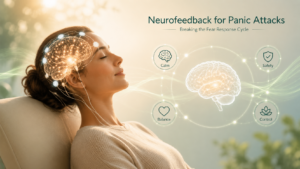
Neurotherapy works through a 3-step mechanism: EEG sensors detect dysregulated brainwave activity → real-time audio or visual feedback is delivered → the brain learns to self-regulate through operant conditioning.
The learning mechanism is operant conditioning. When the brain produces a target brainwave pattern, it receives a reward, a tone, a visual cue, or a game response. When it drifts, the reward stops. Repeated across 20 to 40 sessions, the brain internalizes the target state.
The reason results persist is neuroplasticity. Synaptic connections physically strengthen through repeated activation; neurons that fire together, wire together. A 2021 review in Clinical EEG and Neuroscience confirmed measurable EEG changes consistent with neuroplastic reorganization in theta and beta frequency bands following neurofeedback protocols.
Before any protocol begins, a qEEG brain map establishes the neurological baseline.
What is qEEG Brain Mapping?
qEEG (quantitative electroencephalography) is a diagnostic tool that measures electrical activity across brain regions and identifies dysregulated brainwave patterns before any neurotherapy protocol is designed.
A cap fitted with 19 to 32 electrodes records brainwave frequencies across the scalp. Results are compared against a normative database. Deviations, excess theta at frontal sites, low alpha at parietal regions determine which brainwave patterns require retraining and at which electrode sites. No qEEG assessment means no individualized protocol. Without it, treatment is guesswork.
What Types of Neurotherapy Exist?
Five clinically recognized neurotherapy modalities exist, each targeting a different mechanism:
| Type | Method | Primary Use | Setting |
| Neurofeedback | Real-time EEG brainwave training | ADHD, anxiety, PTSD | Clinical / at-home devices available |
| Biofeedback | HRV and physiological signal regulation | Stress, chronic pain | Clinical / at-home devices available |
| tDCS / TMS | Low-current electrical or magnetic brain stimulation | Depression, TBI | Clinical only |
| Neurotherapy Massage | Manual peripheral nervous system technique | Pain, autonomic regulation | Clinical only |
| Cognitive Rehabilitation | Structured brain training exercises | TBI, cognitive decline | Clinical / supervised |
tDCS and TMS require clinical administration. At-home EEG devices like Muse, NeurOptimal, and Emotiv offer neurofeedback access but lack qEEG-guided protocol design, a significant clinical limitation.
What Conditions Does Neurotherapy Treat?
Neurotherapy is clinically applied to 7 primary conditions, each targeting a specific brainwave pattern:
- ADHD: theta/beta ratio retraining at Cz; strongest clinical evidence base
- Anxiety disorder: alpha wave upregulation to reduce cortical hyperarousal
- Depression: left frontal alpha asymmetry correction; combined with TMS protocols
- PTSD: hyperarousal brainwave pattern reduction; emerging clinical trial data
- Traumatic brain injury (TBI): cognitive and motor pathway retraining; case-level evidence
- Epilepsy: seizure threshold stabilization via SMR (sensorimotor rhythm) training
- Sleep disorders: sleep spindle and delta wave normalization
ADHD and anxiety carry the strongest peer-reviewed evidence. PTSD and TBI evidence is growing, but remains at clinical case and Level 3 data.
How Is Neurotherapy Used to Treat ADHD?
Neurotherapy for ADHD targets the theta/beta brainwave ratio at the Cz electrode site, the central scalp location linked to attention and motor regulation.
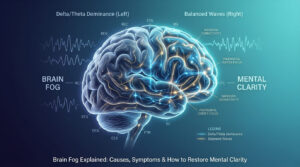
ADHD brains exhibit increased theta activity (4–8 Hz, associated with inattention and daydreaming) and reduced beta activity (13–21 Hz, associated with focused, alert cognition). The protocol trains theta suppression and beta enhancement through operant conditioning over 30 to 40 sessions.
The ISNR classifies neurofeedback for ADHD at Level 5 efficacy, the highest evidence tier, based on multiple randomized controlled trials. A 2019 meta-analysis in Journal of Child Psychology and Psychiatry found neurofeedback produced significant improvements in inattention and hyperactivity comparable to stimulant medication in several trials.
Does neurotherapy replace ADHD medication?
No, not as a first-line substitution. It functions as a clinically validated adjunct or alternative for patients who cannot tolerate stimulants. Pediatric protocols run 30 to 40 sessions; adult protocols average 20 to 30, with adjustments based on qEEG findings.
What Happens During a Neurotherapy Session?
A neurotherapy session follows 4 steps: qEEG assessment → protocol design → active feedback session → progress review.
- qEEG brain mapping: completed before the first treatment session; identifies target brainwave patterns
- Protocol design: practitioner sets electrode sites, frequency targets, and reward thresholds based on qEEG data
- Active feedback session: sensors are placed on the scalp; patient watches a screen or listens to audio that responds in real time to brainwave output
- Post-session review: EEG data from the session is reviewed; protocol is adjusted as brainwave patterns shift
Each session runs 30 to 60 minutes. Recommended frequency is 2 to 3 sessions per week. Measurable neuroplastic results typically require 20 to 40 total sessions.
What Is Neurotherapy Massage?
Neurotherapy massage is a manual technique targeting the peripheral nervous system through soft tissue manipulation to regulate autonomic nervous system function.
It differs from standard therapeutic massage in 2 specific ways. First, it targets peripheral nerve pathways and vagus nerve stimulation rather than muscle tissue relaxation. Second, its clinical goal is autonomic regulation, addressing conditions like chronic pain, nervous system dysregulation, and stress-related somatic symptoms rather than musculoskeletal relief.
One application, peripheral nerve stimulation in the feet, targets plantar nerve pathways connected to the autonomic nervous system, used in chronic pain and neuropathy management.
Evidence level: Neurotherapy massage has less peer-reviewed RCT data than neurofeedback-based protocols. Current support is primarily clinical and case-based.
Does Neurotherapy Really Work?
Yes, neurotherapy produces measurable clinical outcomes. Evidence is strongest for ADHD (Level 5), anxiety (Level 3–4), and PTSD (emerging). Results depend on accurate qEEG assessment, individualized protocol design, and session consistency.
Side effects are rare and mild: temporary fatigue and short-lived headaches reported in a minority of cases. No serious adverse events have been documented in peer-reviewed pediatric or adult neurofeedback trials.
Contraindications include active psychosis, certain seizure types, and implanted cardiac devices. Negative outcomes, reported under searches like “neurofeedback ruined my life” are traced to one consistent cause: treatment without qEEG-guided, individualized protocol design. Standardized protocols applied without diagnostic assessment produce the highest rate of adverse temporary effects.
Clinical Brain Training vs. Consumer Apps
Clinical neurotherapy uses qEEG-guided, individualized protocols. Consumer brain training apps do not.
Apps like Lumosity, BrainHQ, and Elevate deliver cognitive tasks that improve task-specific performance. They do not measure brainwave activity, do not use EEG sensors, and do not produce neuroplastic changes equivalent to clinical neurofeedback.
At-home EEG devices, Muse, NeurOptimal, and Emotiv, offer real biofeedback but lack individualized qEEG protocol design. They are appropriate for general stress regulation and wellness monitoring. They are not appropriate substitutes for clinical treatment of ADHD, PTSD, TBI, or epilepsy.
Are consumer brain training apps as effective as clinical neurotherapy?
No. The mechanisms, diagnostic precision, and evidence bases are not equivalent.
How Much Does Neurotherapy Cost?
A single neurotherapy session costs $100 to $250 in a clinical setting. A full 20 to 40 session treatment plan costs $2,000 to $10,000. An initial qEEG brain mapping assessment adds $250 to $600.
At-home EEG devices range from $400 to $3,000 as a one-time purchase. Most insurance providers do not cover neurotherapy. Medicare and Medicaid coverage remains limited and diagnosis-dependent; some PTSD and TBI cases qualify under specific billing codes.
How to Find a Qualified Neurotherapy Practitioner
The primary credential to verify is BCIA certification, Biofeedback Certification International Alliance. BCIA-certified practitioners meet standardized training, supervised hours, and examination requirements specific to neurofeedback and biofeedback.
3 steps to evaluate a provider:
- Confirm BCIA or equivalent board certification
- Ask whether treatment is guided by qEEG brain mapping, not a standardized template
- Request outcome data or documented case results from the practitioner
Red flags: guaranteed results claims, no intake assessment, no qEEG use. Use the ISNR and BCIA practitioner directories to locate verified providers for searches like neurofeedback therapy near me.
What Is the Future of Neurotherapy?
AI-assisted protocol design is reducing the time required to interpret qEEG data and adjust brainwave targets in real time. Wearable EEG devices are lowering treatment costs and expanding access outside clinical settings. Integration of neurotherapy into standard psychiatric treatment plans is increasing, particularly for ADHD, PTSD, and treatment-resistant depression. Peer-reviewed output in journals like Journal of Neurotherapy and Clinical EEG and Neuroscience has grown consistently over the past decade, strengthening the evidence base across multiple conditions.
Frequently Asked Questions
Does neurotherapy really work?
Yes. Neurotherapy produces measurable outcomes with the strongest evidence in ADHD, anxiety, and PTSD. The ISNR classifies neurofeedback for ADHD at Level 5, the highest evidence tier. Results depend on qEEG-guided protocol design and session consistency.
Is neurotherapy the same as neurofeedback?
No. Neurofeedback is one modality within the broader neurotherapy field. Neurotherapy also includes biofeedback, tDCS, TMS, neurotherapy massage, and cognitive rehabilitation, none of which are EEG-based feedback.
Is neurotherapy safe for children?
Yes, when administered by a BCIA-certified practitioner using age-appropriate protocols. No serious adverse events have been reported in peer-reviewed pediatric neurofeedback trials. Mild, temporary fatigue or headache occurs in a minority of cases.
How long does neurotherapy take to show results?
20 to 40 sessions for measurable, lasting results. Early changes in attention or mood may appear within 10 sessions. Sustained neuroplastic change requires full protocol completion at 2 to 3 sessions per week.
Can neurotherapy be done at home? Partially.
At-home EEG devices like Muse and NeurOptimal provide real biofeedback. They are appropriate for wellness and stress regulation, not for clinical treatment of ADHD, PTSD, TBI, or epilepsy, which require qEEG-guided protocols.
What is the most effective mental health treatment?
No single treatment is universally most effective. Evidence-based options include CBT, pharmacotherapy, and neurotherapy, each targeting different mechanisms. Neurotherapy is most effective when applied to conditions with measurable brainwave dysregulation, such as ADHD, anxiety, and PTSD.