Buy or rent our products online!
If you are considering neurofeedback for yourself or your child, safety is the first and most important question — and the clinical research gives a clear, consistent answer.
Neurofeedback is non-invasive, drug-free, and does not introduce electricity, medication, or any external substance into the brain. Sensors placed on the scalp only read brainwave activity — nothing is transmitted inward. Across decades of randomised controlled trials, systematic reviews, and meta-analyses, no serious adverse event attributable to neurofeedback has ever been reported. The American Academy of Family Physicians (AAFP) describes it as ‘generally well tolerated.’ A 2023 meta-analysis of RCTs found no problematic side effects versus control groups. And two-year follow-up studies confirm no delayed harm of any kind.
Why Neurofeedback Is Inherently Safe
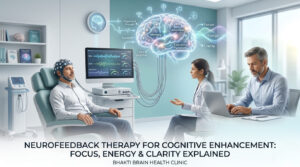
Neurofeedback — also called EEG biofeedback or neurotherapy — works through operant conditioning. Sensors measure the brain’s naturally occurring electrical activity and feed it into software that translates real-time brainwave patterns into an audio or visual reward signal. When the brain produces a healthier pattern, it receives positive feedback and gradually learns to self-regulate toward that pattern.
This is fundamentally different from transcranial magnetic stimulation (TMS), transcranial direct current stimulation (tDCS), or electroconvulsive therapy (ECT) — all of which introduce external energy into the brain. Neurofeedback introduces nothing. There is no mechanism by which passive brainwave reading and operant-conditioning-based feedback could cause structural neurological harm. FDA-cleared neurofeedback devices (such as BrainMaster) hold 510(k) clearance confirming their safety for clinical use.
- No electrical stimulation of any kind — sensors only measure
- No pharmaceutical agents — entirely drug-free
- No magnetic pulses, anaesthesia, or medical procedure
- No irreversible changes — the brain learns through practice, not chemical alteration
- No dependency or withdrawal — neuroplastic gains persist after training ends
What the Clinical Research Actually Shows
Major Reviews and RCTs
A 2023 systematic review and meta-analysis of neurofeedback RCTs for ADHD and epilepsy found neurofeedback disclosed no problematic side effects compared to controls — no sleep problems, tics, headaches, stomach aches, irritability, appetite loss, seizures, nausea, or agitation. A foundational PMC review by Arns et al. (2012) examined three studies specifically addressing adverse effects and found no safety issues in any of them. No trial has ever recorded a discontinuation due to side effects.
The AAFP (2022) characterised neurofeedback as well tolerated, noting only the possibility of mild fatigue or headaches — while confirming the absence of serious harm. A systematic review of neurofeedback in cancer survivors — one of the most medically complex patient populations — found that across 17 studies all outcomes were positive, with only 3 studies noting any side effects at all, all of them mild and transient. A two-year ADHD follow-up study found maintained improvements in behaviour and attention — and zero delayed adverse effects.
What Are the Actual Side Effects of Neurofeedback?
An honest safety discussion acknowledges that mild, transient effects can occur — particularly in early sessions when the brain is actively adapting to new training demands. The key word is transient: none are permanent, none are serious, and most resolve without intervention.
| Side Effect | How Common | Duration |
| Mental fatigue | Most common | Same day; fades over sessions |
| Mild headache | Occasional | Hours; resolves same day |
| Emotional sensitivity | Rare; early sessions only | 1–2 days |
| Temporary symptom increase | Rare; protocol adjustment resolves | Resolves with change |
| Serious / permanent harm | None reported in any RCT | N/A |
By far the most common effect is mental fatigue — neurologically comparable to the tiredness felt after intensive cognitive work or learning a new skill. This typically diminishes after the first several sessions as the target brainwave patterns become more automatic for the brain.
In patients being treated for active seizure disorder, the AAFP noted a subset experienced worsening. This is the one population requiring additional clinical caution. At Bhakti Brain Health Clinic, every patient’s qEEG assessment includes a clinical EEG read that can identify occult epilepsy before training begins — addressing this risk proactively.
Is Neurofeedback Safe for Children?
Yes. The American Academy of Pediatrics (AAP) recognised neurofeedback as a safe treatment option for paediatric ADHD in 2010. Neurofeedback has been used therapeutically in children since the 1970s, and no lower age limit for safe use has been established in the clinical literature. Children as young as 4–5 years have participated in research trials without adverse effects.
The non-invasive, drug-free, positive-reinforcement design of neurofeedback makes it particularly suitable for children. There are no pharmaceutical agents to metabolise, no sedation needed, and no invasive procedure. For parents concerned about long-term stimulant medication — a concern the research supports — neurofeedback offers a drug-free alternative whose safety record in children is as strong as in adults.
What Makes Neurofeedback Safe in Practice: qEEG Guidance
The research consistently points to two factors that determine both safety and effectiveness: protocol quality and clinician training. A poorly calibrated protocol — applied without objective brain data — is more likely to produce the temporary symptom fluctuations that create concern. This is the clinical rationale for qEEG-guided neurofeedback: objective brain mapping eliminates guesswork from protocol design and ensures training targets the brain’s actual dysregulation pattern.
At Bhakti Brain Health Clinic, no patient begins neurofeedback without first completing a quantitative EEG (qEEG) brain mapping assessment. The map reveals precisely which frequencies are dysregulated, in which regions, and by what statistical magnitude. The neurofeedback protocol is built in direct response to those findings — and monitored with repeat qEEG assessments throughout treatment. This data-driven approach is not just more effective. It is clinically safer.
Frequently Asked Questions
Is neurofeedback safe?
Yes. Neurofeedback is non-invasive and drug-free. Sensors only read brainwave activity — nothing enters the brain. Decades of RCTs, systematic reviews, and meta-analyses confirm no serious adverse events in any clinical trial. The AAFP describes it as generally well tolerated. The most common effect is mild, transient mental fatigue.
Can neurofeedback damage your brain?
No. There is no evidence in the clinical literature that neurofeedback can cause brain damage or any permanent neurological harm. The mechanism — operant conditioning via passive EEG feedback — has no established pathway for structural damage. No RCT has recorded neurological injury attributable to neurofeedback.
Is neurofeedback safe for children?
Yes. The American Academy of Pediatrics recognised it as a safe treatment option for ADHD in 2010. Children as young as 4–5 have participated in research without adverse effects. The drug-free, non-invasive, positive-reinforcement design is particularly appropriate for paediatric patients.
What are neurofeedback side effects?
The most common is mild mental fatigue after sessions, which typically fades within the first few weeks of training. A small minority of patients experience occasional headaches or brief emotional sensitivity in early sessions. No permanent, serious, or harmful side effects have been reported in any published randomised controlled trial.
Is neurofeedback safer than ADHD medication?
Neurofeedback and medication have different safety profiles. Long-term stimulant medications carry risks, including height/weight suppression in children, cardiac considerations, appetite suppression, and rebound effects on discontinuation. Neurofeedback has no established equivalents: it is non-chemical, non-dependency-forming, and neuroplastic gains often persist after training ends.
Safe, qEEG-Guided Neurofeedback at Bhakti Brain Health Clinic — Edina, MN
Bhakti Brain Health Clinic is a specialist neurotherapy clinic in Edina, Minnesota, serving patients throughout the greater Minneapolis–Saint Paul area. Every neurofeedback protocol we design starts with a full qEEG brain mapping assessment — the objective neurological data that makes personalised, drug-free brain training as safe and targeted as possible.
We treat patients of all ages — including children — managing ADHD, anxiety, depression, PTSD, traumatic brain injury, OCD, sleep disorders, and more. Our Neurotherapy Grant Program supports patients who need financial assistance accessing care. The research says neurofeedback is safe. A qEEG brain map at Bhakti tells you whether it is right for your brain.
Begin Safe, qEEG-Guided Neurofeedback at BhaktiEvery neurofeedback protocol at Bhakti Brain Health Clinic, Edina MN starts with a qEEG brain map — the objective data that makes drug-free brain training both safe and precisely targeted to your brain. → Schedule Your Free Initial Consultation ←bhaktibrainhealthclinic.com • 888-783-BBHC (2242) • 7300 Metro Blvd #340, Edina, MN 55439 |
Neurofeedback’s safety profile is one of its most compelling clinical attributes. In a landscape where effective treatments often carry meaningful risks, decades of rigorous research confirm that neurofeedback is safe, well-tolerated, and free from serious adverse effects across all populations studied — including children. Combined with qEEG guidance and qualified clinical oversight, it represents one of the safest pathways available in brain-based mental health care.