Buy or rent our products online!
Two patients. Both diagnosed with ADHD. One can barely sit still — impulsive, hyperactive, unable to stop fidgeting. The other sits quietly, staring out the window, unable to start or sustain any task at all. Same diagnosis. Completely different brains.
This is the clinical reality that standard diagnostic labels — ADHD, depression, anxiety, PTSD — do not capture. A diagnosis names a pattern of observable symptoms. It does not reveal what is happening at the neurological level that produces those symptoms. That is precisely what a qEEG brain map does — and why two people with the same diagnosis can have entirely different brainwave signatures requiring entirely different treatment protocols.
Why a Diagnosis Doesn’t Tell You What the Brain Is Doing
Psychiatric and neurodevelopmental diagnoses are built on behavioural observation and symptom checklists. The DSM-5 criteria for ADHD, for example, require six or more inattention or hyperactivity-impulsivity symptoms — but those symptoms can arise from several distinct neurological states that produce similar surface presentations.
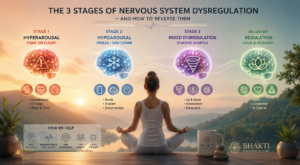
Research using quantitative EEG has identified at least three distinct neurophysiological subtypes in ADHD alone: cortical hypoarousal (the brain is under-activated, producing excess slow theta waves in frontal regions), cortical hyperarousal (the brain is over-activated, producing excess high-beta), and an internalising/anxious subtype (elevated slow alpha, often co-occurring with anxiety or mood symptoms). Each subtype has a distinct brainwave profile — and each requires a different neurofeedback protocol.
The same principle applies across every major mental health diagnosis. Depression is not one neurological state. Anxiety is not one neurological state. Two patients carrying the same diagnostic label may have opposite brainwave findings — and applying the same protocol to both is clinically equivalent to prescribing the same antibiotic for every bacterial infection without testing which strain is present.
How qEEG Reveals Neurophysiological Subtypes
A qEEG brain map compares a patient’s brainwave activity — across all frequency bands and all 19 electrode sites — against a normative database of age and gender-matched healthy individuals. Deviations of more than two standard deviations from the norm are clinically significant. What those deviations look like varies enormously between individuals with the same diagnosis.
| Condition | qEEG Subtype | Key Brainwave Finding | Protocol Implication |
| ADHD | Cortical hypoarousal | Excess frontal theta, low beta | Theta/beta ratio training |
| ADHD | Cortical hyperarousal | Excess high-beta, low alpha | High-beta down-training |
| ADHD | Internalising/anxious | Excess slow alpha (eyes closed) | Alpha reduction + SMR training |
| Depression | Left DLPFC hypoactivation | Frontal alpha asymmetry | Alpha asymmetry (ALAY) protocol |
| Depression | Slow-wave dominant | Excess frontal theta/delta | Frontal theta down-training |
| Anxiety | Temporal hyperarousal | Excess temporal high-beta | High-beta down-training T3/T4 |
| Anxiety | Alpha-deficient | Suppressed frontal/parietal alpha | Alpha enhancement training |
These are not minor distinctions. A patient with cortical hypoarousal ADHD needs their brain activated — trained toward producing more beta, less theta. A patient with cortical hyperarousal ADHD needs the opposite: high-beta down-training to reduce overactivation. Applying a hypoarousal protocol to a hyperarousal brain — which would happen without a qEEG — would not merely fail to help. It would make symptoms worse.
Three Real Clinical Scenarios
The Inattentive Child and the Hyperactive Child — Both Called ADHD
A 9-year-old who daydreams through class and never finishes assignments may show elevated frontal theta on qEEG — the classic hypoarousal pattern. A 7-year-old who disrupts class, acts impulsively, and cannot settle may show excess high-beta — a hyperarousal pattern driven by an overactive stress response. Both children have ADHD. Their brains are doing opposite things. The right protocol for each is the mirror image of what the other needs.
Two Adults with Depression — Same Label, Opposite Maps
Patient A: left frontal alpha asymmetry — underactive left DLPFC, the classic frontal alpha asymmetry (FAA) finding linked to low positive affect and anhedonia. Patient B: excess frontal theta and delta — slow-wave dominance suggesting a deeper underactivation or possible TBI history. Both are diagnosed with major depressive disorder. Both need neurofeedback. Neither can benefit from the other’s protocol.
Anxiety with High-Beta vs. Anxiety with Low Alpha
One anxiety patient shows excess high-beta in temporal regions — an amygdala-linked hyperarousal pattern driving panic and racing thoughts. Another shows suppressed frontal alpha — an inability to access the brain’s natural relaxation state, producing chronic low-grade tension and insomnia. Both have generalised anxiety disorder. The first needs high-beta down-training. The second needs alpha enhancement. A generic anxiety protocol helps neither optimally.
Why Generic Protocols Fail — and Why qEEG Changes Everything
The clinical rationale for qEEG-guided neurofeedback is straightforward: you cannot target what you cannot see. Without objective brain data, a neurofeedback protocol is a best guess based on diagnostic category. With a qEEG, it is a precision intervention built around what this patient’s brain is actually doing — which frequencies are dysregulated, in which regions, and by how much, expressed as a Z-score deviation from normal.
This is also why the research consistently shows better outcomes for qEEG-informed neurofeedback than for protocol-based training alone. A 2025 PMC review confirmed that qEEG subtyping improves neurofeedback protocol selection for ADHD — and the same principle applies across depression, anxiety, PTSD, and TBI. The brain is not homogeneous. Treatment should not be either.
Frequently Asked Questions
Why do two people with the same diagnosis have different brainwave patterns?
Because psychiatric diagnoses are based on observable symptoms, not neurological measurements. The same symptoms can arise from different underlying brain states — different frequency dysregulations, in different regions, with different severities. A qEEG brain map reveals the specific neurophysiological pattern unique to each individual, which a diagnostic label alone cannot.
What is a neurophysiological subtype?
A neurophysiological subtype is a grouping of patients who share a common brainwave pattern despite carrying the same clinical diagnosis. For ADHD, research has identified at least three subtypes: cortical hypoarousal (excess theta), cortical hyperarousal (excess high-beta), and an internalising/anxious profile (elevated slow alpha). Each subtype responds to a different neurofeedback protocol.
Can the wrong neurofeedback protocol make symptoms worse?
Yes. Applying a protocol designed for one subtype to a brain with the opposite pattern can worsen symptoms. This is why qEEG brain mapping before treatment is not optional — it is the clinical foundation of safe, effective neurofeedback. At Bhakti Brain Health Clinic, no patient begins training without a qEEG assessment first.
How does qEEG identify which protocol is right for me?
The qEEG records brainwave activity across all 19 electrode sites and all frequency bands, then compares every data point to an FDA-recognised normative database. Regions and frequencies that deviate significantly from healthy norms — expressed as Z-scores — are identified as the treatment targets. The neurofeedback protocol is then designed to move those specific patterns toward normal range.
Personalised qEEG-Guided Neurofeedback at Bhakti Brain Health Clinic — Edina, MN
Bhakti Brain Health Clinic is a specialist neurotherapy clinic in Edina, Minnesota, serving patients throughout the greater Minneapolis–Saint Paul area. Every patient begins with a full qEEG brain mapping assessment — because your diagnosis is not your brain map. What your brain is actually doing determines which neurofeedback protocol will help it. We design every protocol around your individual neurophysiological findings, not your diagnostic category. Our Neurotherapy Grant Program supports patients who need financial assistance accessing care.
Find Out What Your Brain’s Pattern Actually IsAt Bhakti Brain Health Clinic in Edina, MN, your qEEG brain map identifies your unique neurophysiological subtype — so your neurofeedback protocol targets exactly what your brain needs, not what your diagnosis suggests. → Schedule Your Free Initial Consultation ← bhaktibrainhealthclinic.com • 888-783-BBHC (2242) • 7300 Metro Blvd #340, Edina, MN 55439 |
Your diagnosis explains what you are experiencing. Your qEEG brain map explains why — and shows precisely what your brain needs to change. At Bhakti, that distinction is the starting point for every treatment plan.