Buy or rent our products online!

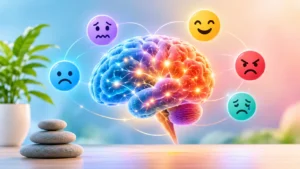
Ask most people what ADHD looks like, and they will describe distraction, restlessness, or forgetfulness. Ask many people who live with it, or who parent a child who does, and they often add something else: emotions that arrive fast, feel huge, and are hard to turn down. A small criticism lands like a blow. Frustration spills over before there is time to think. Excitement and disappointment both seem to run at full volume.
This article explains what emotional dysregulation means in the context of ADHD, what is known about why it happens, and what helps. It is educational only. Emotional intensity has many possible causes, and it cannot be used to diagnose ADHD or any other condition.
What We Mean by Emotional Dysregulation
Emotional regulation is the ability to notice a feeling, tolerate it, and respond in a way that fits the situation. It includes how quickly emotions rise, how strong they get, and how long they take to settle. Difficulty with this process is often called emotional dysregulation.
It is worth being clear about its status. Emotional dysregulation is not one of the formal diagnostic criteria for ADHD. However, many clinicians and researchers recognise it as a common and impactful feature for a significant number of people with ADHD, and it has been the subject of growing research interest. It is also found in many other conditions and circumstances, including anxiety, depression, trauma-related conditions, autism, sleep deprivation, and ordinary stress.
What It Can Look Like
Experiences differ from person to person. Some commonly described patterns include:
- Quick irritability or frustration that surprises the person themselves
- Strong reactions to minor setbacks, followed by rapid recovery, or lingering distress
- Difficulty “turning off” a feeling once it starts
- Intense enthusiasm that can switch to boredom or disappointment
- Heightened sensitivity to criticism or perceived rejection
- Tearfulness or overwhelm during stress
- Regret after an outburst, with difficulty explaining it afterwards
In children, this may appear as tantrums that seem out of proportion for their age or difficulty bouncing back after small disappointments. In adults, it may show up in relationships, parenting, or the workplace, often with considerable shame afterwards.
A Note on Rejection Sensitivity
Many people describe an extreme sting from criticism, teasing, or perceived disapproval. The term “rejection sensitive dysphoria” is used informally in some ADHD communities to describe this. It is not a formal diagnosis, and research on it as a distinct entity is limited. Still, the experience it describes is real for many people, and it is worth discussing openly with a professional, since sensitivity to rejection also appears in anxiety, depression, and trauma-related conditions.
What Might Be Happening in the Brain
Researchers have explored several explanations, and the science is still developing. The following is a simplified picture.
Prefrontal regulation. The prefrontal cortex helps evaluate situations and calm the brain’s emotional centres. Differences in how prefrontal regions and the limbic system, which includes the amygdala, communicate may make it harder to dampen emotional responses quickly.
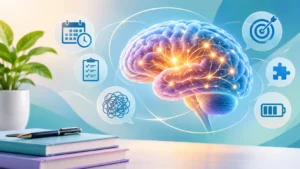
Executive function. The same skills used to plan, pause, and shift attention also help regulate emotion. When these skills are less reliable, it can be harder to stop and reappraise a situation in the heat of the moment.
Neurotransmitters. Dopamine and norepinephrine, which are involved in attention and motivation, also influence mood and reactivity. Differences in these systems are thought to play a role in ADHD more broadly.
Context. Sleep deprivation, stress, hunger, and overstimulation can reduce anyone’s regulation capacity. For people with ADHD, who may already find regulation more effortful, these factors can tip the balance faster.
These are working models rather than final answers, and they do not explain every person’s experience.
Why It Matters
Emotional dysregulation can affect relationships, school and work performance, self-esteem, and wellbeing as much as, or sometimes more than, attention symptoms. Many people feel misunderstood, described as “too sensitive,” “dramatic,” or “difficult,” when what they are managing is a real difficulty with regulating intensity.
Recognising it can reduce self-blame and open the door to more helpful support.
Overlap With Other Conditions
Because emotional intensity occurs in so many conditions, assessment should be careful. Anxiety, depression, bipolar-spectrum conditions, trauma-related symptoms, autism, and certain medical or hormonal factors can all involve mood reactivity. Distinguishing among them requires a detailed history and a qualified professional. A mood that cycles dramatically over days or weeks, or involves significant changes in sleep and energy, deserves prompt medical attention rather than self-assessment.
Strategies That May Help
Different approaches work for different people, and professional guidance is often useful.
- Build in pauses. Even a brief delay, such as a few slow breaths before replying, gives the prefrontal cortex time to engage.
- Name the feeling. Putting a label on an emotion, such as “I am feeling embarrassed,” can reduce its intensity for many people.
- Protect the basics. Regular sleep, movement, meals, and downtime lower baseline reactivity.
- Plan for predictable triggers. Knowing which situations are hardest, such as transitions or criticism, allows planning in advance.
- Repair afterwards. Returning to an interaction with an apology and explanation can protect relationships and reduce shame.
- Skill-based therapy. Approaches such as cognitive behavioural therapy and dialectical behaviour therapy-informed skills have been used to build emotion-regulation skills. A qualified clinician can advise what fits.
- Medical review. For some people with ADHD, treatment of core symptoms, including medication where appropriate, may also change emotional experience. This is a matter for a prescribing physician, and no one should alter medication without medical guidance.
For children, parents can help by staying calm, validating feelings while keeping limits, and discussing strategies once everyone has settled, not in the middle of the storm.
Where Brain-Based Assessment May Fit
At Bhakti Brain Health Clinic, an assessment-led approach to attention and emotional regulation concerns can include a detailed history and qEEG brain mapping. A qEEG may provide quantitative information about patterns of brain activity that can be considered alongside clinical findings, but it does not diagnose ADHD, mood conditions, or anything else on its own. Neurotherapy, where appropriate, is explored as a possible complement to behavioural therapy, practical strategies, and medical care, and it is not a replacement for them.
What This Means for You
Intense, fast-moving emotions are a common and often overlooked part of life with ADHD for many people, even though they are not formal diagnostic criteria. They are not a character flaw, and they are not proof of ADHD either. If emotional intensity is affecting your relationships, work, or sense of self, a comprehensive evaluation can help clarify what is going on and which supports might help.
FAQs
Is emotional dysregulation part of ADHD?
It is not a formal diagnostic criterion, but many clinicians and researchers recognise it as a common feature for many people with ADHD. It also occurs in many other conditions, so it cannot be used alone to identify ADHD.
What is rejection sensitive dysphoria?
It is an informal term used to describe intense emotional pain in response to perceived criticism or rejection. It is not a formal diagnosis and research on it is limited, but the experience it describes is reported by many people.
Why do I feel emotions so intensely?
There can be many reasons, including temperament, stress, sleep, anxiety, trauma, and neurodevelopmental differences. A qualified professional can help sort out what may be contributing in your case.
Can children with ADHD learn to regulate emotions?
Regulation skills develop over time, and children can be supported with consistent routines, calm adult responses, and skill-building. Professional guidance can help where difficulties are significant.
Does ADHD medication help with emotional symptoms?
For some people, treatment of core ADHD symptoms also affects emotional regulation, but responses vary. Any decisions about medication should be made with a prescribing physician.
Can neurofeedback fix emotional dysregulation?
No intervention can promise that. Neurofeedback is explored by some people as a complementary option for supporting regulation, and evidence is still developing. It does not replace therapy, medical care, or practical strategies.
If intense emotions are making daily life harder than it needs to be, a personalised assessment can be a useful starting point. Bhakti Brain Health Clinic can help you explore next steps based on your individual concerns and goals.