Buy or rent our products online!
In a world driven by performance, attention, and mental clarity, many individuals are searching for safe, non-invasive ways to optimize their brain function. Neurofeedback therapy has emerged as a powerful solution for enhancing cognitive performance, improving focus, boosting energy, and achieving mental clarity—without medication.
At Bhakti Brain Health Clinic, neurofeedback is used as part of a holistic, science-backed approach to brain health, helping individuals unlock their full cognitive potential through personalized brain training.
What Is Neurofeedback Therapy?
Neurofeedback therapy, also known as EEG neurofeedback, is a type of biofeedback that trains the brain to function more efficiently. It works by monitoring brainwave activity in real time and providing feedback that helps the brain self-correct and regulate itself.
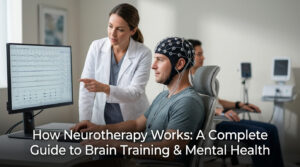
Using electroencephalography (EEG), sensors are placed on the scalp to measure brainwave patterns. These signals are then translated into visual or auditory feedback, allowing the brain to learn how to optimize its performance through repetition and reinforcement.
Unlike medication-based treatments, neurofeedback is:
- Non-invasive
- Drug-free
- Focused on long-term brain optimization
- Based on neuroplasticity (the brain’s ability to rewire itself)
How Neurofeedback Works for Cognitive Enhancement
The human brain operates through different types of brainwaves—such as alpha, beta, theta, and delta—each associated with specific mental states like relaxation, focus, or deep thinking.
Neurofeedback therapy helps regulate these brainwaves by:
- Identifying imbalances in brain activity
- Providing real-time feedback through screens or sounds
- Reinforcing healthy brainwave patterns
- Encouraging self-regulation over time
For example, individuals struggling with low focus may show excessive theta waves and insufficient beta activity. Neurofeedback trains the brain to increase beta waves, improving attention and mental performance.
Key Benefits of Neurofeedback for Focus, Energy & Clarity
1. Improved Focus and Attention
Neurofeedback helps regulate attention-related brainwave activity, making it especially effective for individuals with attention difficulties. It enhances sustained concentration, reduces mental distractions, and supports executive function.
2. Enhanced Mental Clarity
By optimizing brainwave balance, neurofeedback reduces brain fog and improves information processing speed. This leads to sharper thinking, better decision-making, and clearer mental awareness.
3. Increased Energy Levels
Mental fatigue is often linked to inefficient brain activity. Neurofeedback improves brain efficiency, allowing individuals to maintain higher energy levels throughout the day without burnout.
4. Better Memory and Learning
Neurofeedback supports memory retention and cognitive flexibility by strengthening neural pathways. This is especially useful for students and professionals seeking improved learning performance.
5. Stress Reduction and Emotional Regulation
Balanced brainwaves contribute to reduced stress, improved emotional control, and a calmer mental state, which directly impacts cognitive performance.
Neurofeedback and Neuroplasticity: The Science Behind It
Neurofeedback therapy is grounded in the principle of neuroplasticity—the brain’s ability to adapt and reorganize itself.
Through repeated feedback sessions, the brain learns to:
- Reinforce healthy neural patterns
- Reduce inefficient activity
- Strengthen cognitive control networks
Over time, these changes become more stable, leading to lasting improvements in focus, clarity, and mental performance.
Cognitive vs Clinical Applications of Neurofeedback
While neurofeedback is widely used for cognitive enhancement, it also plays a significant role in managing various clinical conditions.
Cognitive Enhancement Uses:
- Improving productivity and performance
- Boosting focus and attention
- Enhancing creativity and problem-solving
- Optimizing mental clarity
Clinical Applications:
- ADHD (attention regulation)
- Anxiety and stress disorders
- Depression
- PTSD
- Insomnia and sleep disorders
This dual functionality makes neurofeedback a versatile tool for both high performers and individuals seeking mental health support.
What Happens During a Neurofeedback Session?
A typical neurofeedback session at Bhakti Brain Health Clinic involves:
- Initial Brain Mapping (qEEG):
A detailed analysis of brainwave activity to identify imbalances. - Sensor Placement:
Non-invasive sensors are placed on the scalp to monitor brain activity. - Real-Time Feedback Training:
The patient watches a screen or listens to sounds that respond to their brain activity. - Reinforcement Learning:
The brain gradually learns to maintain optimal patterns through feedback.
Each session typically lasts 30–45 minutes, and noticeable improvements often occur after multiple sessions.
Neurofeedback vs Other Brain Optimization Methods
Neurofeedback vs Meditation
- Meditation improves awareness and relaxation
- Neurofeedback directly trains brainwave activity
- Neurofeedback offers measurable, targeted results
Neurofeedback vs Cognitive Training Apps
- Apps train behavior and memory
- Neurofeedback trains the brain at a neurological level
Neurofeedback vs Medication
- Medication provides temporary symptom relief
- Neurofeedback promotes long-term brain self-regulation
Is Neurofeedback Safe?
Yes, neurofeedback therapy is considered safe and non-invasive. It does not involve electrical stimulation or medication. Instead, it simply provides feedback to the brain, allowing it to adjust naturally.
Side effects are rare and usually mild, such as temporary fatigue or slight discomfort during early sessions.
How Many Sessions Are Needed?
The number of sessions varies depending on individual goals and brain patterns.
- Mild cognitive enhancement: 10–20 sessions
- Moderate improvement goals: 20–40 sessions
- Clinical conditions: 40+ sessions
Consistency is key, as neurofeedback relies on repeated learning to create lasting neural changes.
Limitations and Scientific Considerations
While neurofeedback shows promising results, it is important to acknowledge:
- Results vary between individuals
- Some studies highlight placebo effects
- Quality of training and practitioner expertise matter
Choosing a reputable clinic like Bhakti Brain Health Clinic ensures a personalized and evidence-based approach.
Why Choose Neurofeedback for Cognitive Enhancement?
Neurofeedback stands out as a modern brain optimization technique because it:
- Targets root causes, not just symptoms
- Enhances natural brain function
- Supports long-term cognitive health
- Improves both mental performance and emotional well-being
For individuals seeking improved focus, higher energy, and better clarity, neurofeedback offers a powerful and sustainable solution.
FAQs
1. what is neurofeedback therapy and how does it work
Neurofeedback therapy is a brain training method that uses EEG technology to monitor brain activity in real time. It provides feedback that helps the brain self-regulate, improving focus, clarity, and overall cognitive performance through repeated learning.
2. does neurofeedback really improve focus and attention
Yes, neurofeedback can improve focus and attention by training the brain to regulate attention-related brainwaves. It helps reduce distractions, enhance concentration, and strengthen executive function, especially in individuals with attention difficulties like ADHD.
3. how long does it take to see results from neurofeedback
Most people start noticing improvements within 10 to 20 sessions, depending on their brain patterns and goals. Long-term and more significant cognitive changes typically require consistent sessions over several weeks or months.
4. is neurofeedback therapy safe for brain training
Neurofeedback therapy is considered safe and non-invasive. It does not involve medication or electrical stimulation. Instead, it uses real-time feedback to help the brain naturally adjust its activity, making it suitable for both adults and children.
5. can neurofeedback increase mental clarity and energy
Yes, neurofeedback helps optimize brainwave activity, which can reduce mental fatigue and brain fog. This leads to improved mental clarity, better focus, and increased energy levels throughout the day without relying on stimulants.
6. What conditions can neurofeedback help treat
Neurofeedback is used for both cognitive enhancement and clinical conditions. It can help with ADHD, anxiety, depression, PTSD, insomnia, and stress, while also improving focus, memory, and overall mental performance.
7. How is neurofeedback different from meditation or brain training apps
Neurofeedback directly trains brainwave activity using EEG feedback, while meditation and apps focus on behavior and mindfulness. It offers a more targeted and measurable approach to improving brain function and cognitive performance.
Final Thoughts
Neurofeedback therapy represents a shift toward precision brain training, combining neuroscience with practical performance enhancement. Whether your goal is sharper focus, sustained energy, or improved clarity, neurofeedback offers a personalized path to better brain health.